

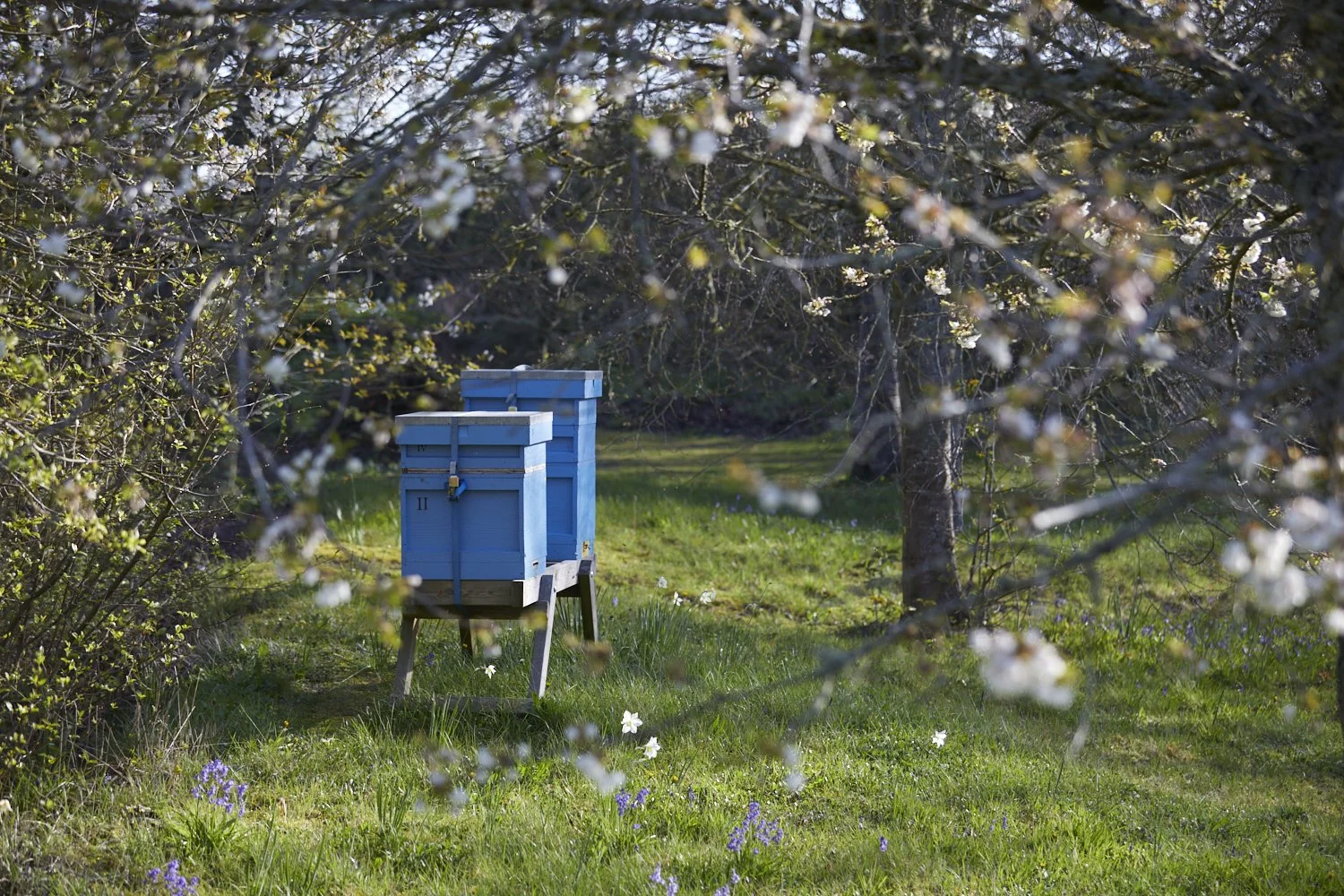
Beehives in my garden
I’ve always thought a garden or landscape isn’t complete without beehives or bird boxes. They’re such a visible sign that a human hand is taking care of Nature.
And so, I have always put up bird boxes in my gardens, and more recently welcomed beehives, with the support of our local beekeeper.
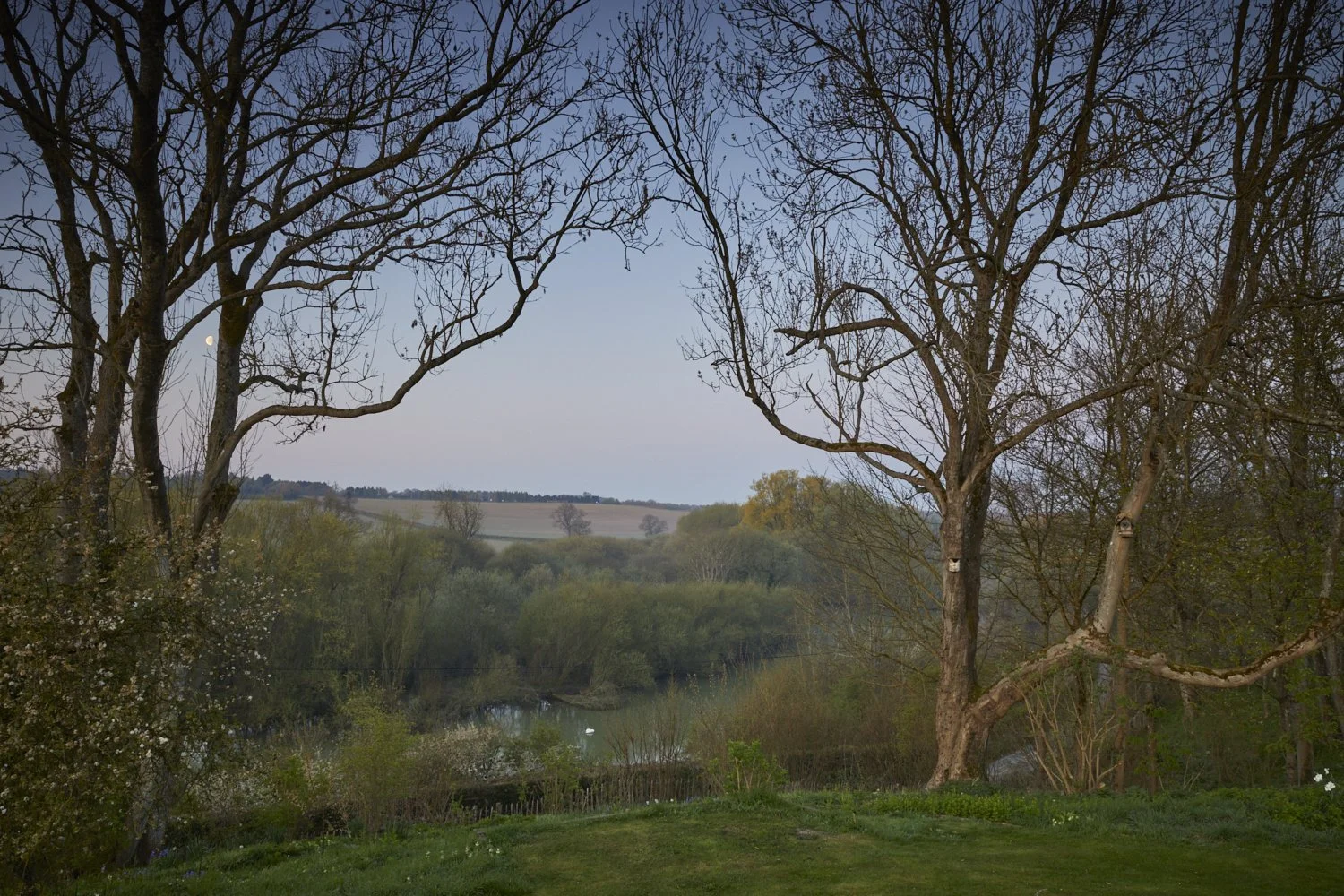
Bird boxes and a distant swan
When moving house earlier this year, the beehives remained as moving bees is a task best undertaken by experts.
I also left our bird boxes behind. After all the birds weren’t moving anywhere! The exception was the owl box. It had only been up for eighteen months and, despite our efforts, had only been home to squirrels.
When I first saw the house with blue windows and its setting surrounded by farmland that had been left to ‘scrub’, I’d sensed that an owl would be happy here. I’d imagined putting an owl box up on the craggy, half dead ash tree close to the house. I’d even told the previous owners of our plan, of which they approved.
Upon sharing it with a friend who came to Sunday lunch shortly after moving in, he suggested I get in touch with the local ‘owl man’. So, of course, I did.
Shortly after receiving my email, James replied asking for our address. He said he’d come round as soon as he’d finished his cup of coffee. Sure enough, 5 minutes later, that Tuesday morning, he did.
Location, location
James is wiry and bent at 89 years old. He resembles a wizard’s assistant stepped out of the pages of Harry Potter. He used to look after around 40 owl boxes at Sandringham Estate and roughly the same number at Holkham. He’s only given up recently because he struggles to climb ladders! There isn’t much James doesn’t know about owls: their comings and goings, their matings, their huntings and their callings.
First, he took a look around our garden. The ash I’d earmarked apparently wasn’t the best. Instead, James settled on the amputated ash tree in the far corner of our garden, which looks out across the open scrub land.
James then asked to see the owl box. After giving it a once-over, looking it up and down and carefully opening it up, he pronounced “It would do”.
Then, curiously, “Where had I got it from?”
I meekly replied “ The Hawk Conservancy in Andover”.
“That’ll be fine”, as he slowly pronounced approval.
James explained how the box should be positioned: 12 feet up a ladder would be high enough, facing east or north, with some sawdust inside to make it more comfortable. (Being night birds, owls don’t like the bright light of a south or west facing box). He also went into great detail about the best way to fix it to the tree (with a vertical splint) as owl boxes are heavy beasts.
We then returned to the garden for James to have a final look. He pronounced the amputated ash tree spot, “Perfect”.
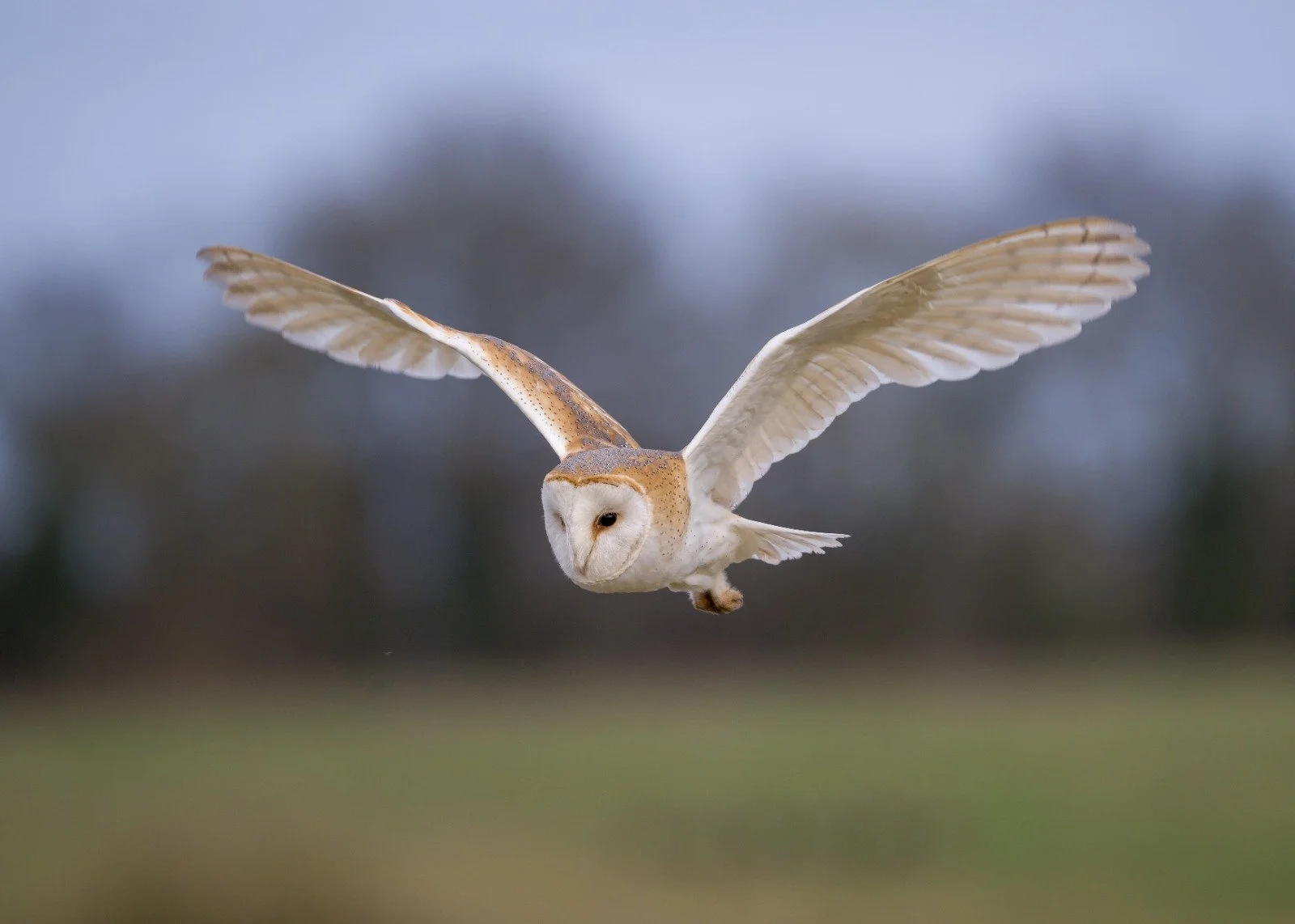
Barn owl ©Deb Heath
Owl Omen
As we stood there at 11am on a Tuesday morning, admiring the spot, something caught both our eyes. Without speaking, we both glanced up. There was the evocative sight of a barn owl flying overhead. It felt like an omen, and we both agreed it was.
Having pronounced his wisdom, I gave James a pot of honey from the beehives in our old house. James was thrilled with the honey and I was delighted with his advice.
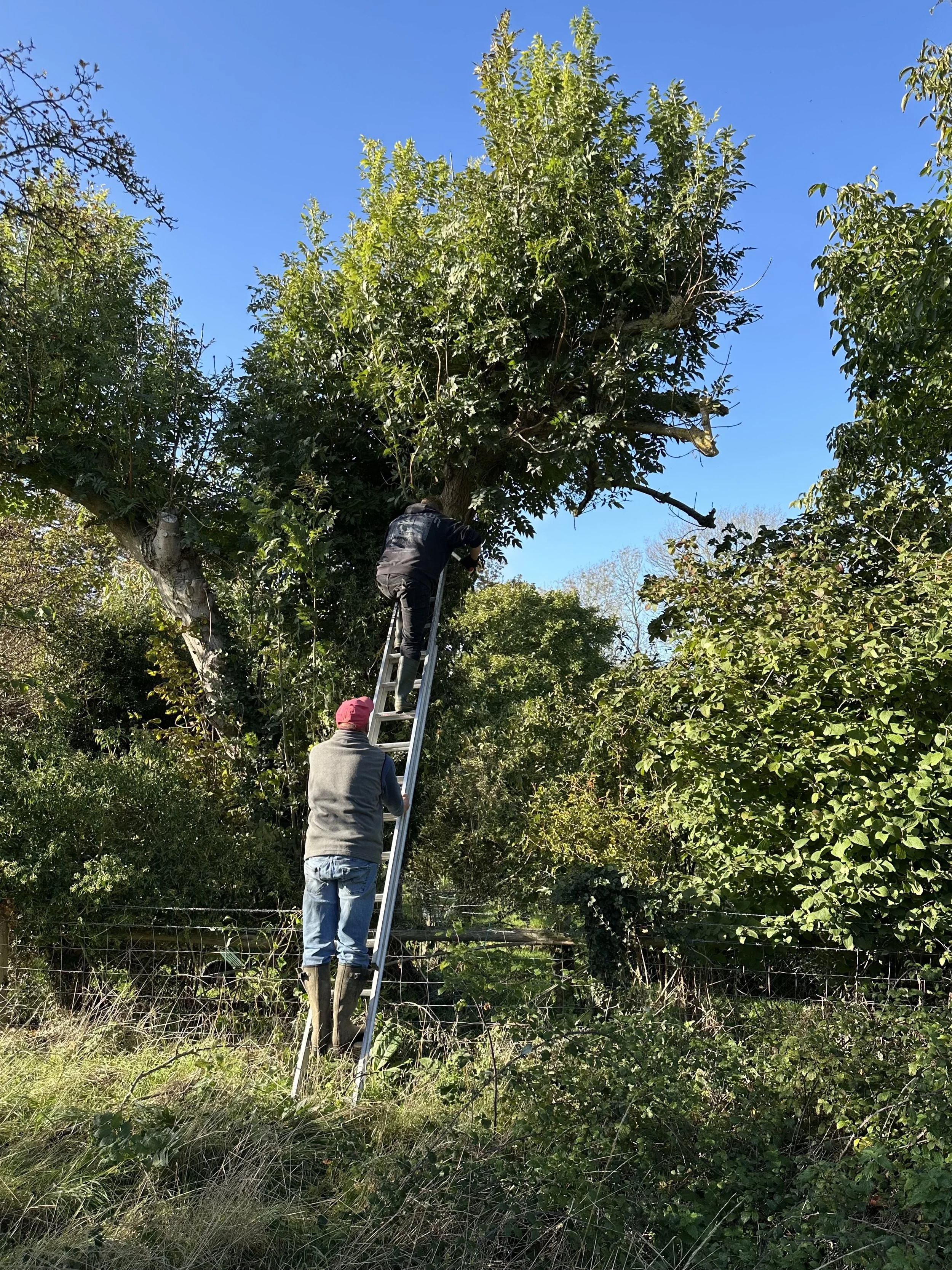
Putting up the owl box on the amputated ash tree
A Good Home
The following Sunday my husband and I woke early. It had been the full harvest moon the night before. Sitting in bed with a cup of coffee we have a good view of the amputated ash tree. And there was the barn owl again. Its ghostly pale form flashing against the fluttering green foliage of the ash.
I think the owl box has found a good home, and we have an owl’s eye view!
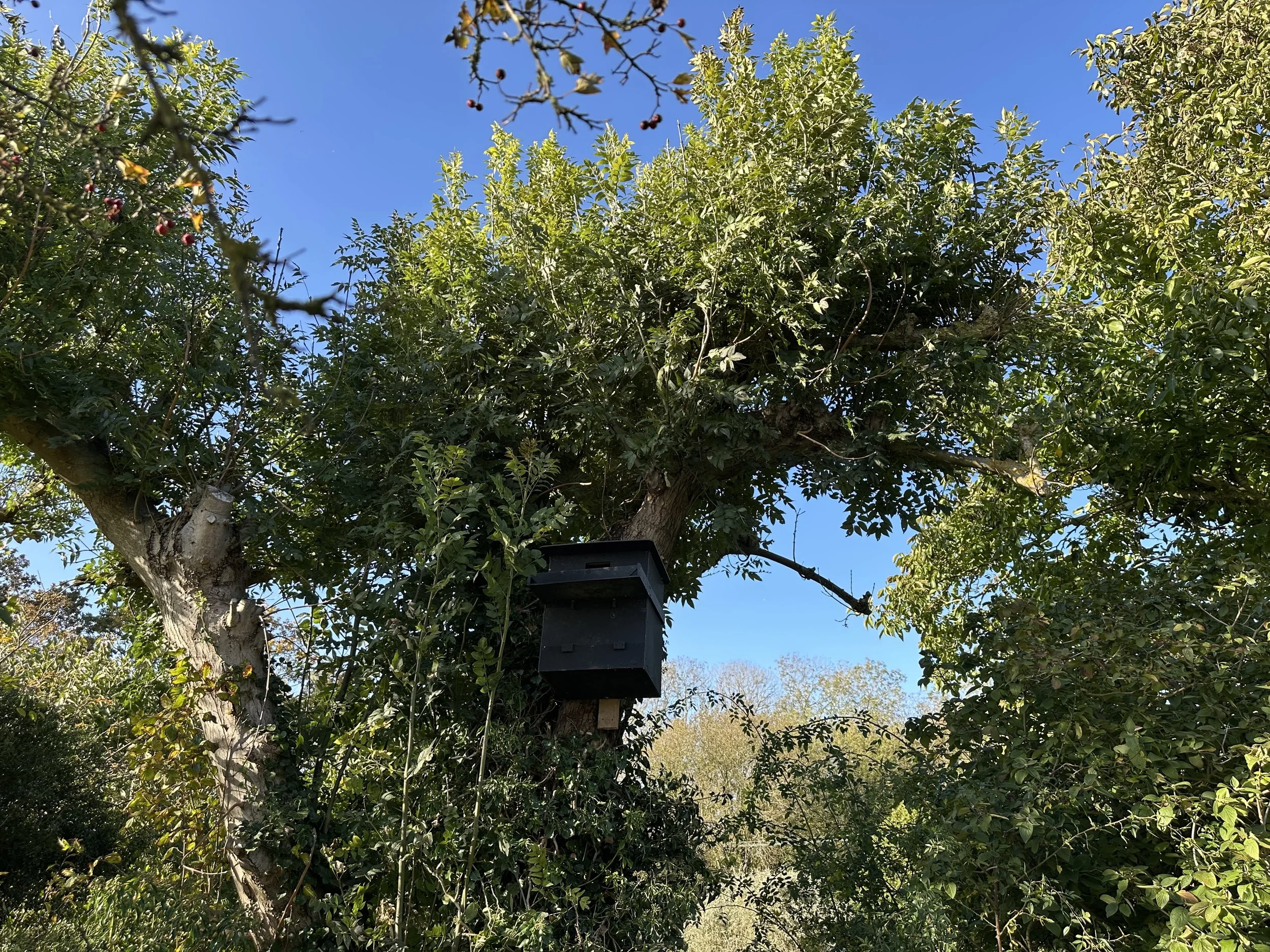
The owl box fixed to the amputated ash tree