

Garden Table Tops
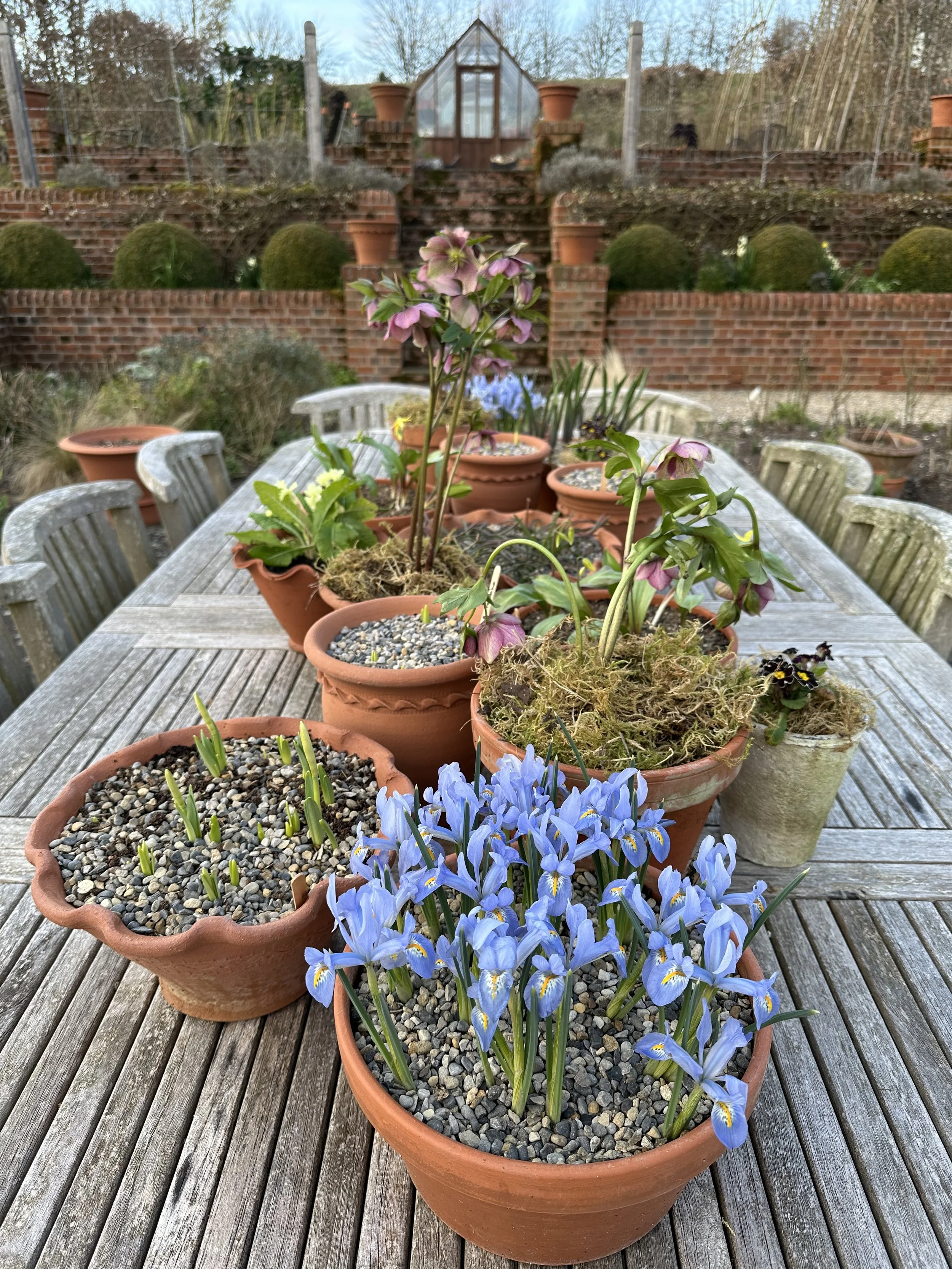
Miniature bulbs and perennials offering a glimpse of spring
“I like what you’ve done with the pots on top of your table,” a friend said. “I’ve not seen that before.”
That chance remark made me wonder whether my quiet passion for ‘table tops’ might be worthy of a Journal. So here goes.
You wouldn’t hesitate to decorate a kitchen table with a vase of flowers, or a hall table with a potted plant and a few treasured objects, so why not a garden table?
So often we look out onto an empty outdoor dining table, close to the kitchen window and directly in our line of sight. It sits bare, catching frost in winter or waiting patiently for that elusive summer moment when it’s finally laid.
I prefer to think of a garden table as a stage: something to be dressed, designed and decorated. A small pleasure that’s easily achieved and easily changed with the seasons. A place for reminders of what’s coming, what’s looking good now, and what’s usually at our feet rather than at eye level. If your garden is getting out of hand and you can’t see the wood for the trees, your table top may be the perfect place to start.
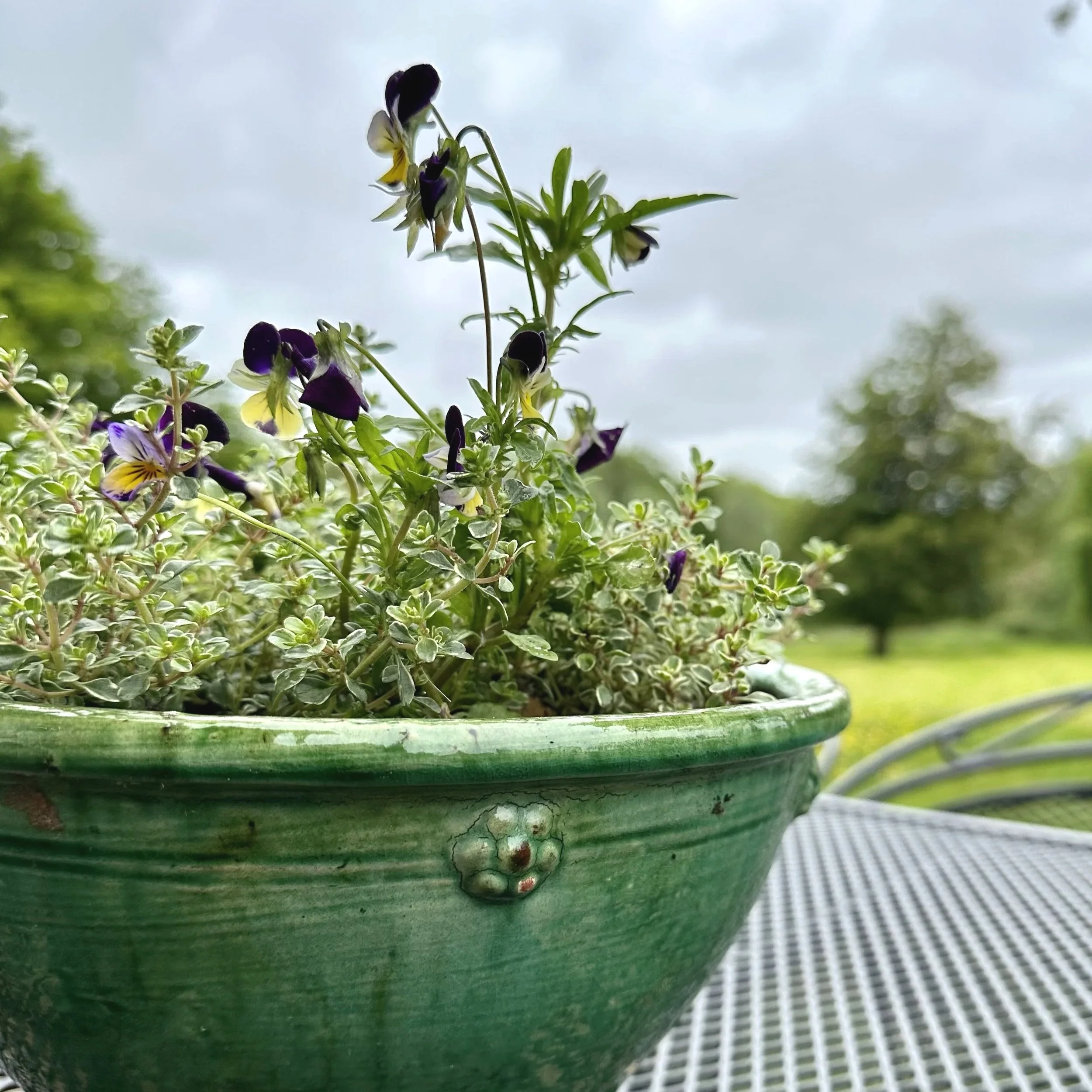
Heartsease and thyme in a Norfolk garden
Spring
It all starts with snowdrops.
A snowdrop lover might arrange their collection on a sheltered table so their delicate beauty can be fully admired, perhaps illuminated with variegated ivy and padded with bright green moss and twigs to show them off. Fleeting joy, when the detail of snowdrops can be overlooked at ground level.
More often, I use my table top to showcase miniature spring bulbs planted the previous autumn, in pots of all shapes and sizes. Topped with horticultural grit or soft green moss, for protection and visual contrast, they’re appealing even as the first shoots break through, quietly anticipating spring.
As one pot of bulbs fades, another takes its place, creating a gentle rhythm of change as the season unfolds.
I like to intersperse miniature bulbs with perennials and small spring-flowering shrubs that will later be planted into the garden. Hellebores are perfect for this (they usually are). I’m also drawn to Prunus incisa ‘Kojo-no-mai’, often available in three-litre pots, with its early blossom and delicate, wiry branches, ideal as a centrepiece around which other pots can gather. Alternatively, Salix gracilistyla ‘Mount Aso’, whose unusual, fluffy pink catkins are impossible to ignore.
There are no rules. Choose what catches your eye.
And if you have no miniature spring bulbs to hand, here’s a secret: good garden centres, nurseries and even the well-known multiples will have pots of spring bulbs available in the next weeks. Repot them into a mix of planters and voilà, you have your table top. When the bulbs are over, save them in their pots for next year, or plant them out into the garden. It really is that easy.
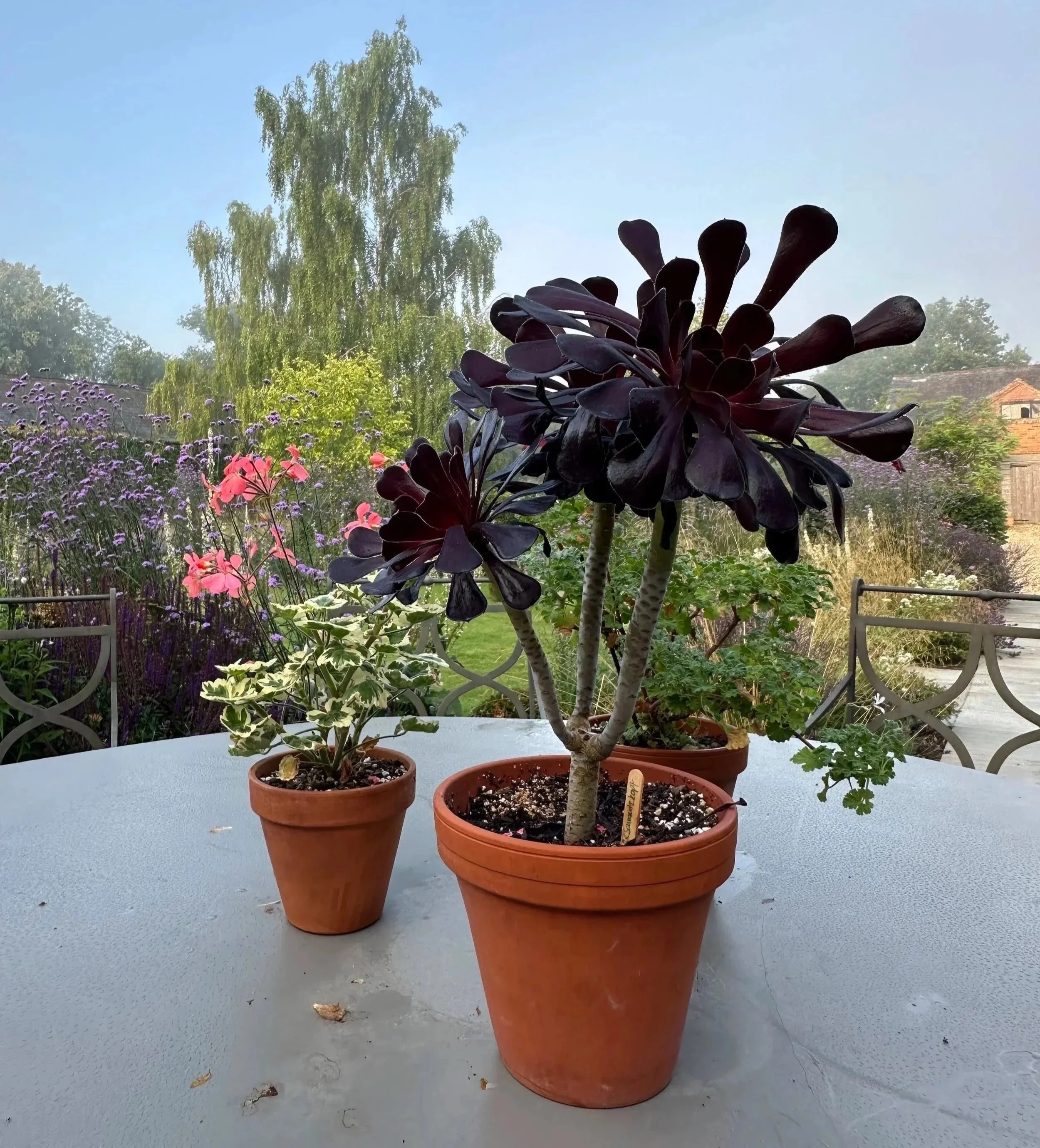
Pelargoniums and Aeonium Schwartzkopf in the Barn Garden
Summer
As spring slides into summer, your choice expands.
Almost any small plant can play a role — it’s the composition that creates interest. Think of it as a planting scheme in miniature: shapes, textures and colours, balanced with plenty of foliage to add a sense of calm.
As the wider garden is demanding attention by now, you may prefer a scheme that’s lower maintenance and, perhaps like mine, not too thirsty. This is when I indulge my love of pelargoniums and aeoniums. My greenhouse gets a clear-out and my collection moves into view from my kitchen window, becoming part of everyday life.
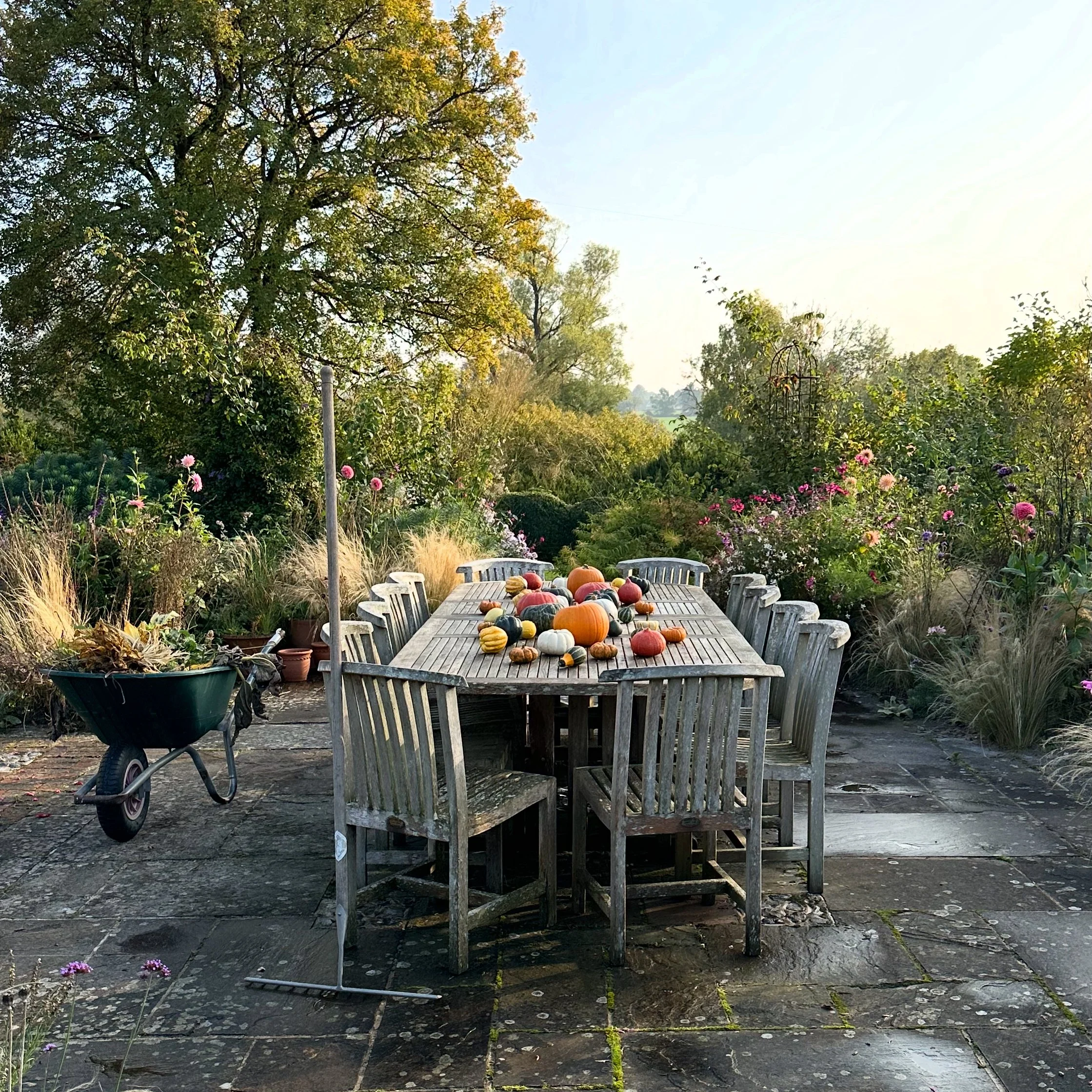
Pumpkins and squash Autumn tableau
Autumn
As summer fades, so does my table top.
Recently, I’ve gathered a colourful collection of home-grown gourds and squashes each autumn, carefully placed, spaced and sized to create a seasonal tableau. Growing different varieties is surprisingly easy but you can just as happily buy squashes and pumpkins in the run-up to Halloween, when shops are filled with wonderful shapes and colours. The knobbly ones are always particularly appealing.
I love to grow Squash ‘Crown Prince’, with its ghostly blue sheen and ‘Uchiki Kuri’, both delicious as well as decorative, along with Squash ‘Turk’s Turban’, surely the most theatrical pumpkin imaginable. Then I add whatever else I’ve grown or discovered along the way.
The beauty of an autumn table top is that much of it is edible, gradually finding its way into my kitchen and larder by late November.
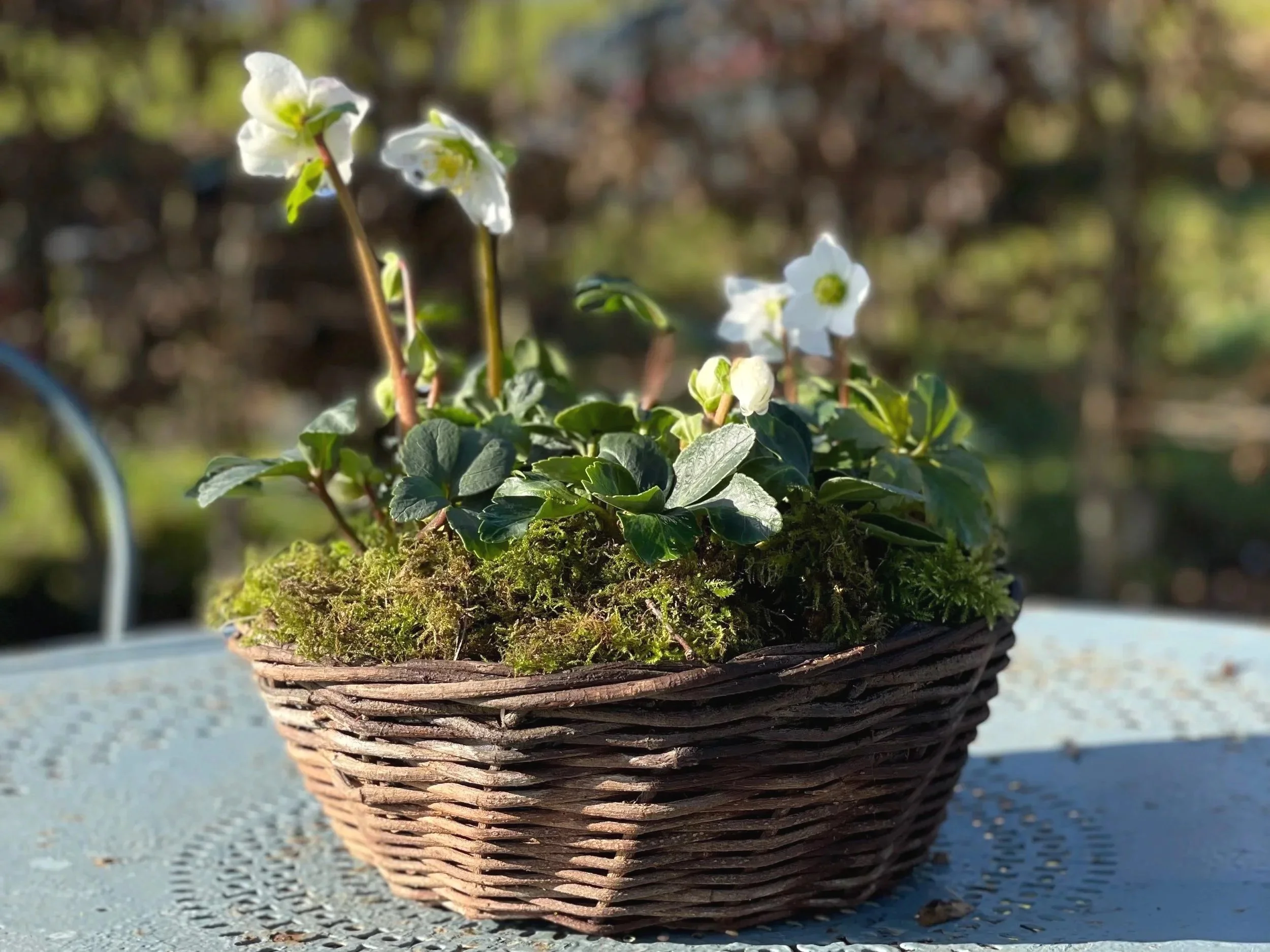
Helleborus niger also known as Christmas roses
Winter
In winter, my table top becomes a quiet focus of green, cream and grey; a reassuring sign of life against the muted backdrop of a deep English winter here in Hampshire.
I always include Christmas roses (Helleborus niger), which are so easy to miss when they flower low to the ground. Their pots are dressed with ivy and moss and, this year, I stuck in a few hazel catkins. I have a particular fondness for twisted hazel, Corylus avellana ‘Red Majestic’, whose coppery, contorted branches create a striking silhouette. Even a young tree in a small pot can look magnificent on a table.
I’d also add Skimmia x confusa ‘Kew Green’ for its lime-green buds and creamy flowers, and Calocephalus ‘Silver Sand’, whose airy grey texture is reminiscent of lichen. In fact, if you find fallen branches covered in lichen, gather them and let them take centre stage, dotted around with a few Christmas roses in pots.
Like decorating an interior table, let your imagination run riot. A table top isn’t permanent; it’s a display to play with and enjoy. Experiment with combinations of colour, form and texture to create a pleasing view at eye level throughout the year. Choose what you love, and it will always make you happy.
Thoughtful details like this are part of how I approach garden design: considering how gardens can be enjoyed for simple pleasures and daily joy.
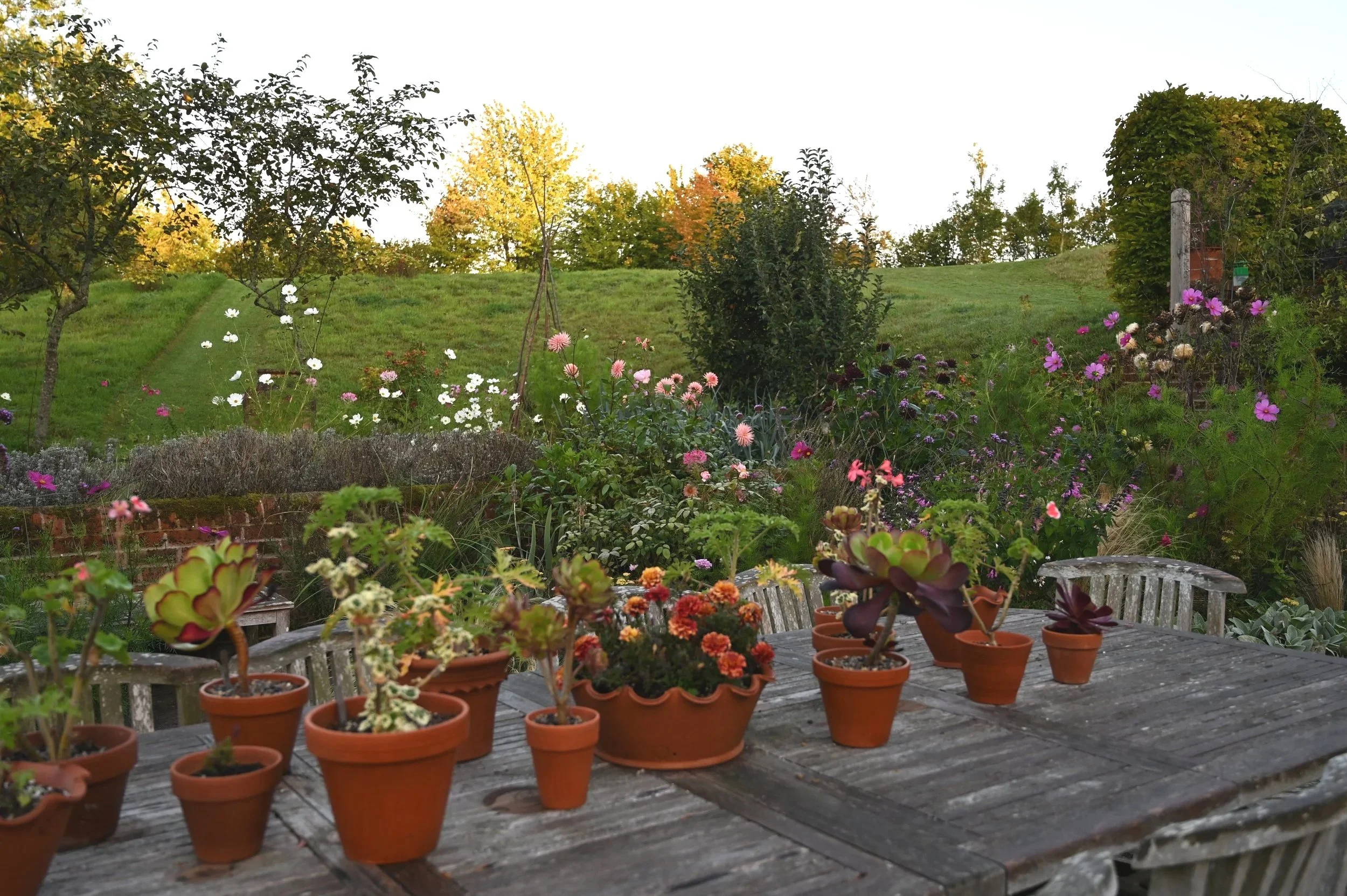
Summer table top of Pelargoniums, Aeoniums and Marigold ‘Strawberry Blonde’