

Uprooted, Potted up and Ready to go
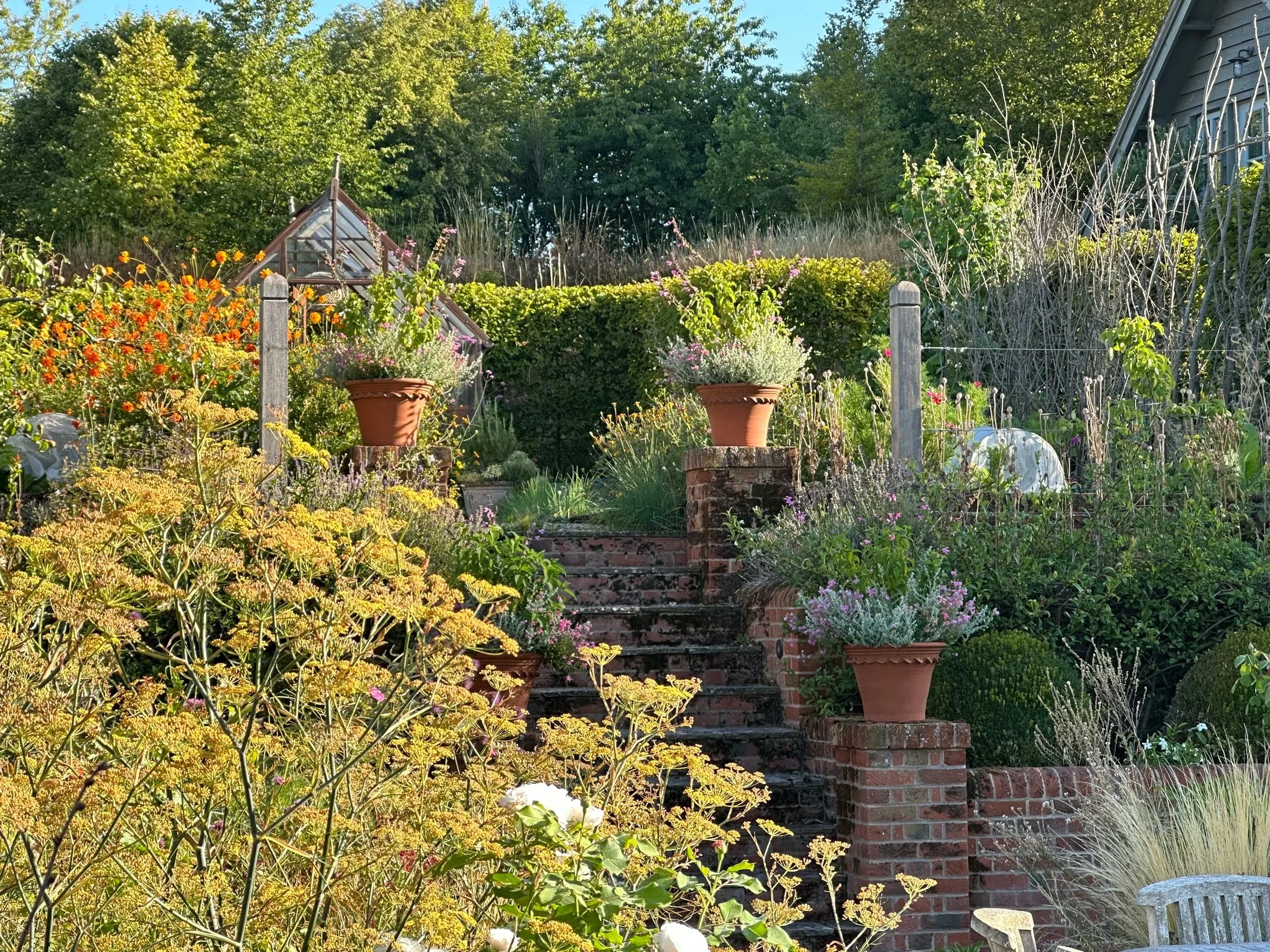
My garden just before packing up
I write as my garden is packed up and travelling 200 miles north as part of a rather unusual convoy.
So many friends and clients have asked how it feels to move garden that I thought I'd share both the practicalities and the emotions of doing exactly that. Perhaps only gardeners understand that moving house is one thing; moving garden is quite another.
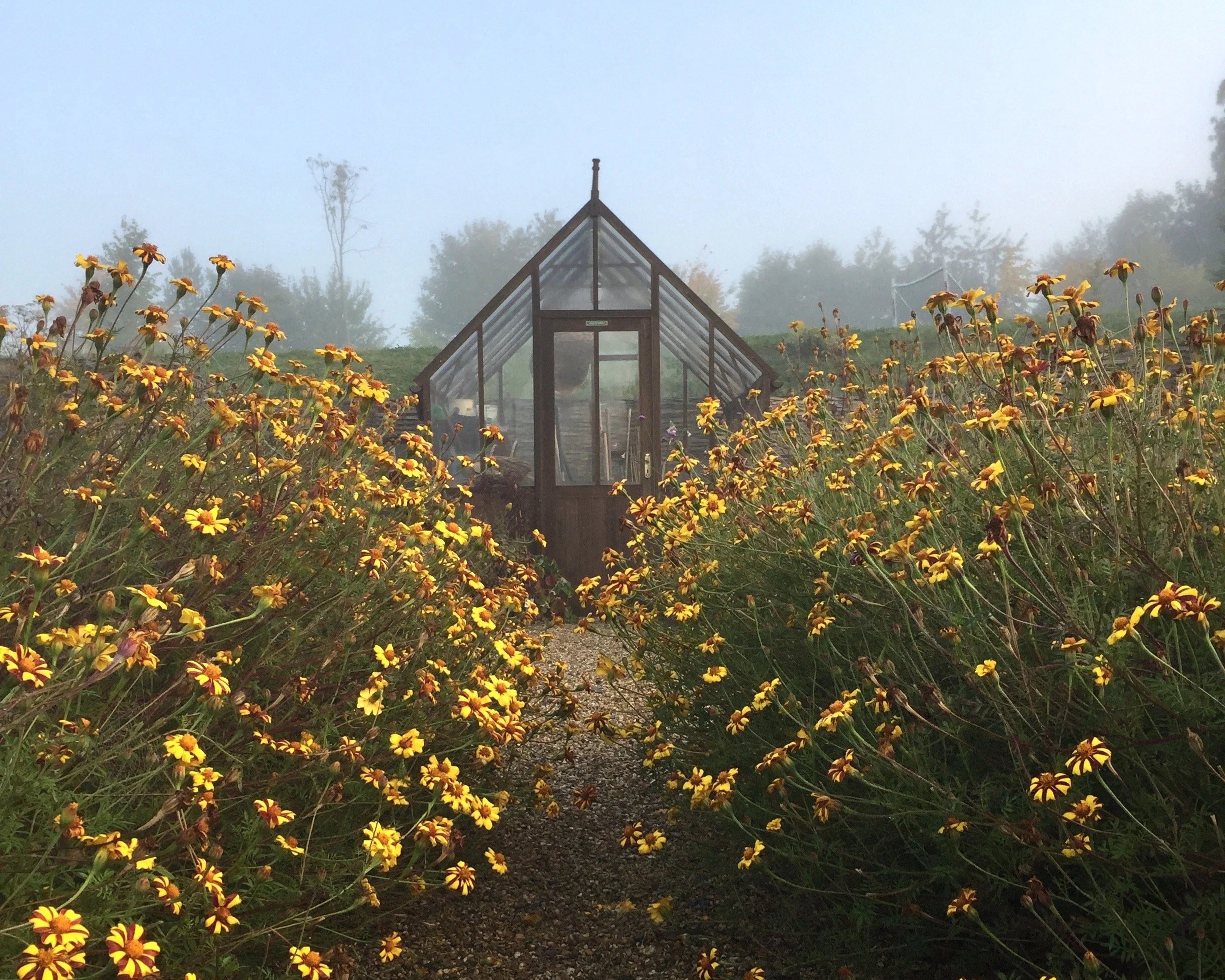
My Alton Greenhouse is staying put
Legalities
First, the legalities. Conveyancing requires sellers to leave a property reasonably clean and free of rubbish which includes the garden. In our case, that has meant countless trips to the local recycling centre. We are now on first-name terms!
The Fixtures and Fittings Form allows sellers to specify what is included in the sale. Anything firmly fixed, such as our shed and greenhouse, is staying behind, along with the trees, shrubs and plants in the ground. But everything in pots, together with the garden furniture and ornamentation, has been excluded from the sale. After all, these have been collected over many years and are transportable. Well, that was my thinking.
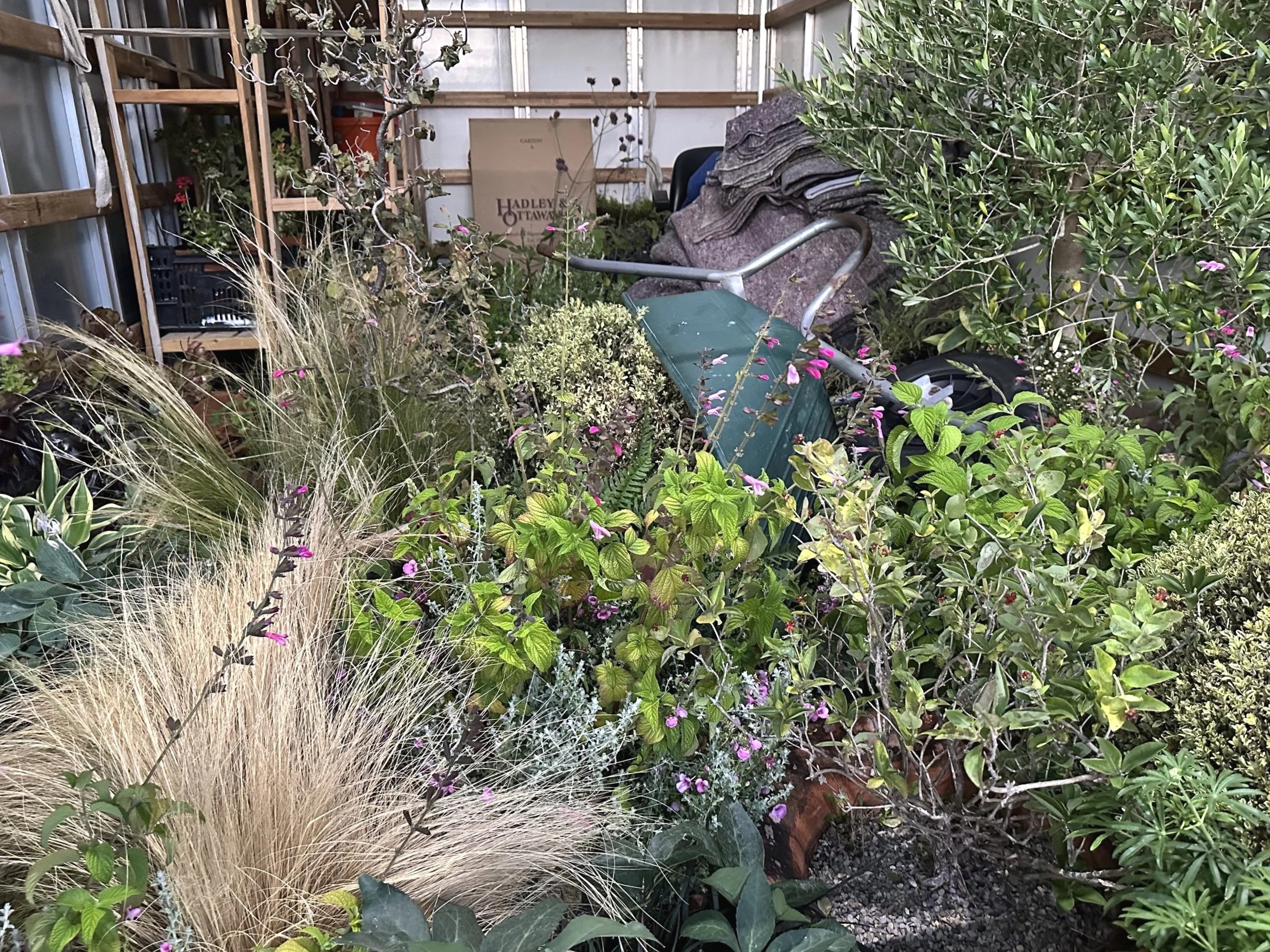
All packed up
Practicalities
Who knew the most expensive and troublesome part of any house move would be the plant pots, plants, ornaments, adornments and general horticultural paraphernalia? They don't fit neatly into stackable cardboard boxes like books or pictures or hang obediently in wardrobe cartons like clothes.
The ride-on mower and its trailer take up an alarming amount of space in the removal lorry. My husband is determined to take them with him, and who am I to object when I have my own garden removal negotiations to win?
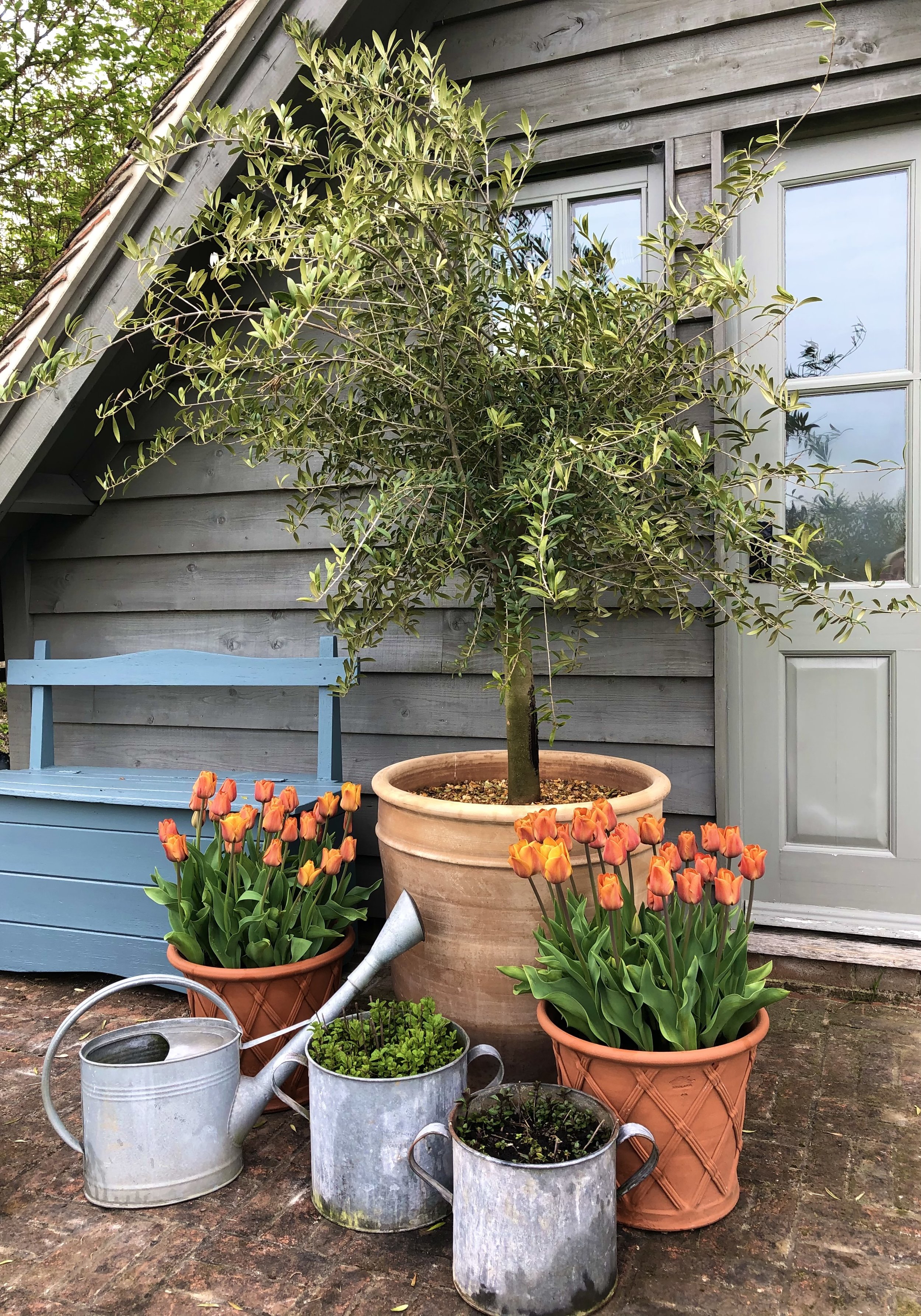
The treasured olive tree gift
Plant Pots
My plant pots are fragile, large and cumbersome to move. Two removal companies informed me that a large potted olive tree would have to stay behind. Little did they know it was a thoughtful gift from the team I lead in my previous career. Needless to say, they didn't get the job.
Alongside the olive tree is my extensive collection of Whichford pots, all of which are coming with me, come what may. Four are planted with a flourish of Salvia 'Pink Amistad', the soft grey foliage of Helichrysum petiolare 'Goring Silver', pretty pink Verbena and Diascia 'Monhop Pink'. I've cut them back, given them a thorough watering and shall simply hope for the best. Their familiar colour will be a welcome sight in our new garden until the frosts come.
Almost all my other planted terracotta pots are expendable and have been emptied so they can stack neatly for transport.
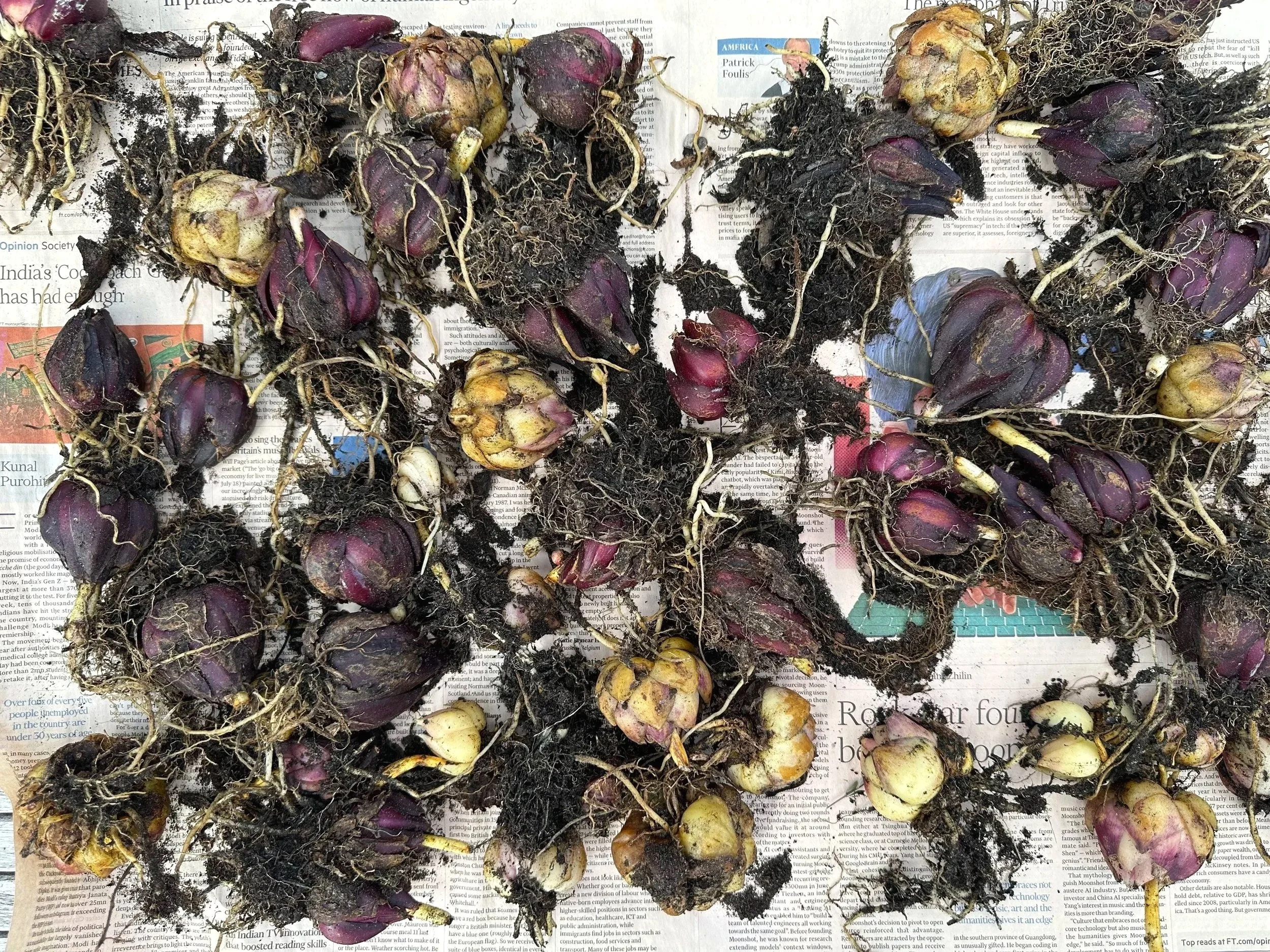
Lillium regale bulbs sunbathing
I've given plants away, lifted the lily bulbs now they've flowered and wrapped them carefully in the pink shredded pages of the Financial Times. The remains of various summer displays have been tipped onto the compost heap, allowing the terracotta pots to nest together, saving space in the dedicated garden removal lorry.
Pelargoniums & Succulents
The only exception is my collection of pelargoniums and succulents. They've been packed into large black horticultural crates, while over the past few months, I've taken cuttings and distributed them amongst green-fingered friends and family as a useful insurance policy.
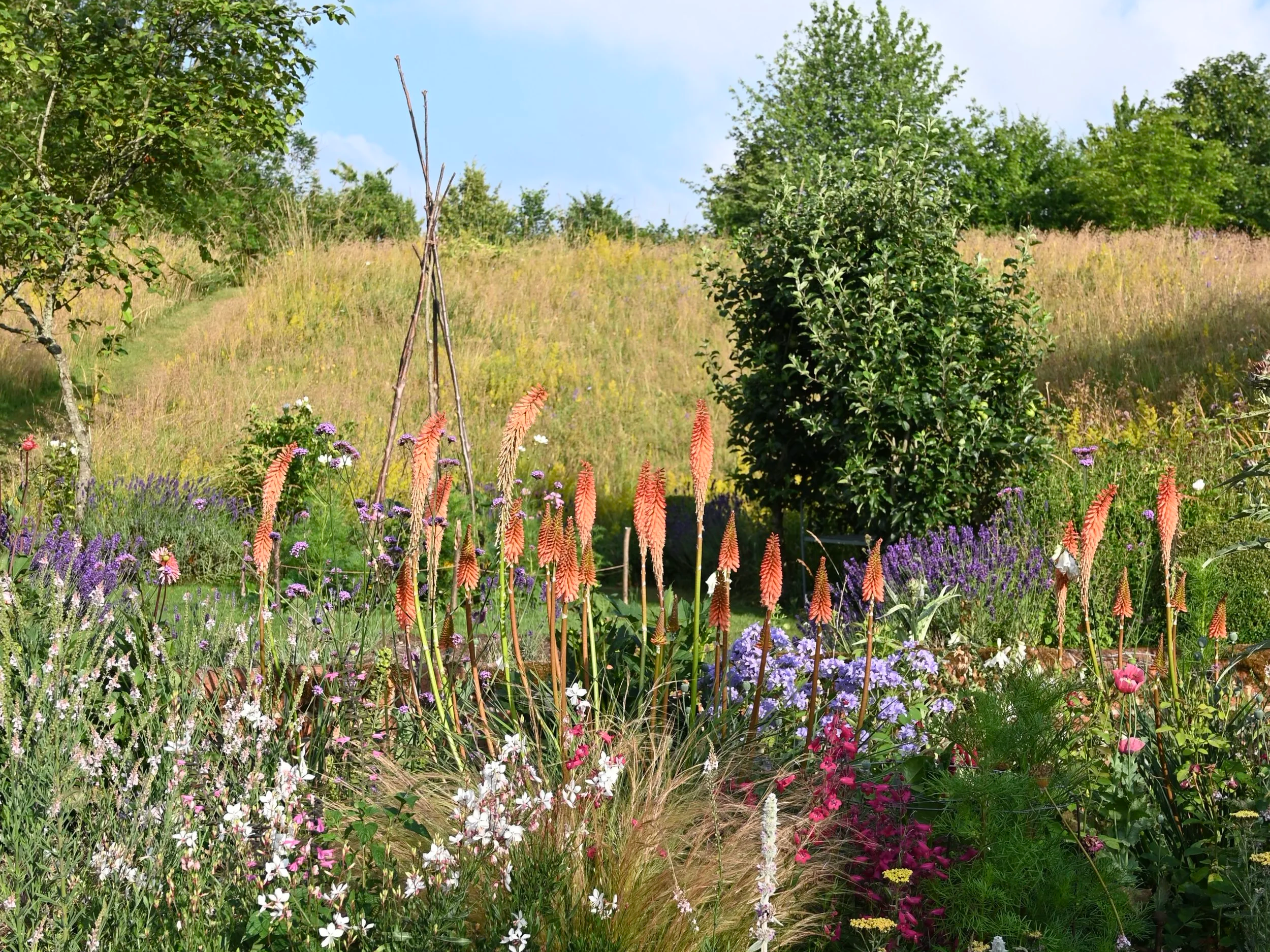
Apricot spires of Knofophia ‘Timothy’
Perennial Splitting
Rather than dig up special perennials, I've divided them.
This applies particularly to my Benton irises. "One for you, one for me" seems only fair, and they'll be all the better for it. I've done the same with Kniphofia 'Timothy', another firm favourite that's surprisingly difficult to find. Both should relish the dry conditions of their new home.
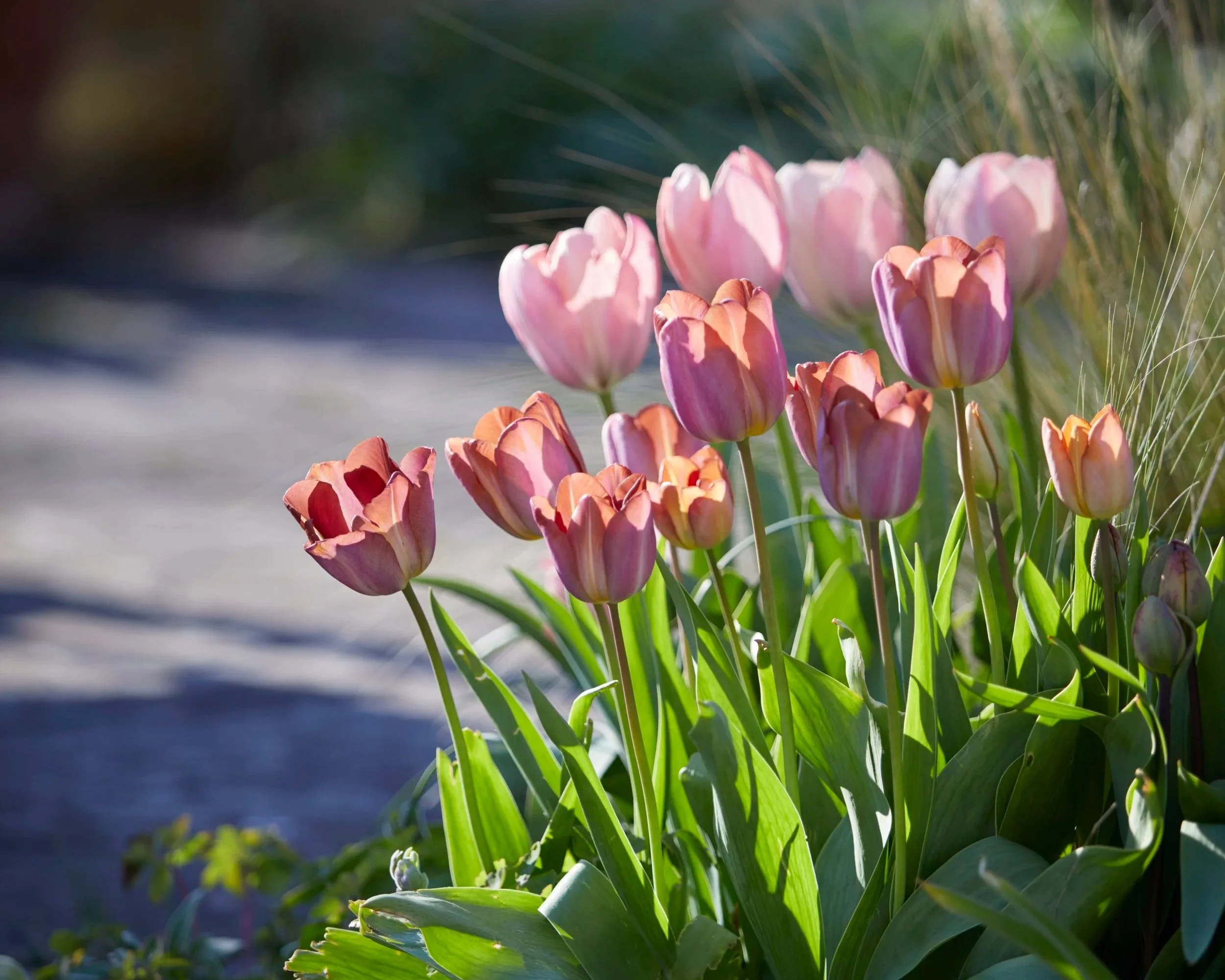
Tulipa ‘Brune Wimpel’ with Tulipa ‘Salmon van Eijk’
Rare Bulbs
I've also lifted a handful of Tulipa 'Brune Wimpel', also known as 'Malaika', which is sadly no longer available. I shall have to ask Polly Nicholson, of The Tulip Garden fame, how best to multiply them.
All my other bulbs have been left behind. I don't have many special snowdrops, at least not yet. If I did, they would certainly be making the journey too.
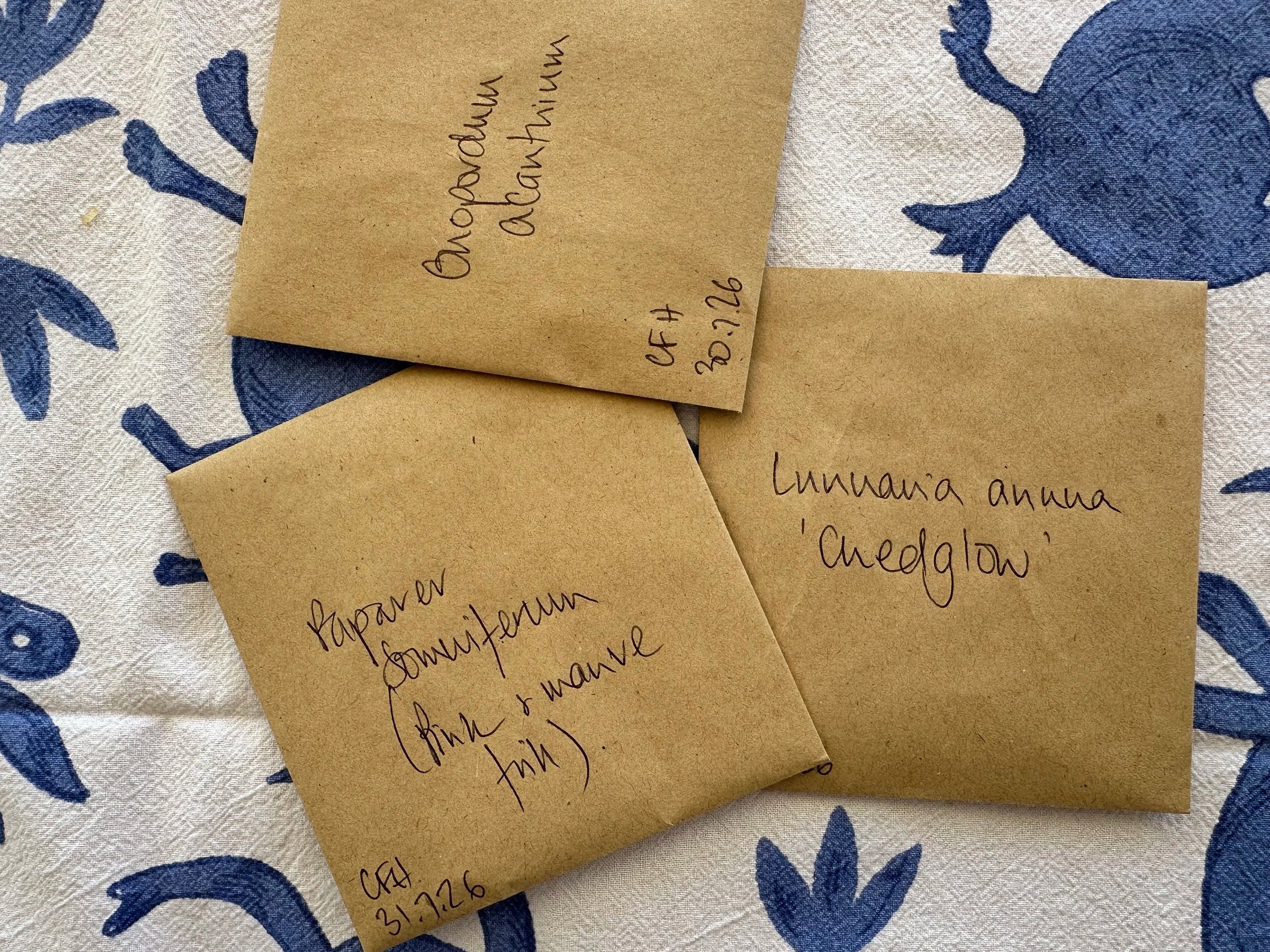
Seeds packets labelled with date and place of gathering
Seed Gathering
The truth is that buying plants and bulbs is one of my guilty pleasures, which perhaps explains why so few are actually travelling north with me. I also love growing plants from seed and, taking up almost no packing space, seeds are perfect travellers.
The recent heatwave has ripened them early, which has proved something of a bonus ahead of our August move.
A beautiful Papaver somniferum, which greeted us when we first arrived at this house, has produced an abundance of seed. Its pink and mauve frilled flowers have become part of this garden's story, and I hope they'll happily write a new chapter in Norfolk.
I've also gathered Lunaria annua 'Chedglow', with its rich chocolate foliage and purple flowers, together with my favourite Scottish thistle, Onopordum acanthium.
Finally, I've searched out the pyramidal orchids growing in our wildflower meadow and collected a small amount of their dust-like seed together with the bone-dry soil in which they grow, hoping to preserve the essential mycorrhiza. Orchids have a remarkable symbiotic relationship with the fungi in their soil, and I'm hoping that sowing both together will encourage them to establish in the meadow of our new garden. I understand it may take five years before I see flowers. Gardening rewards patience.
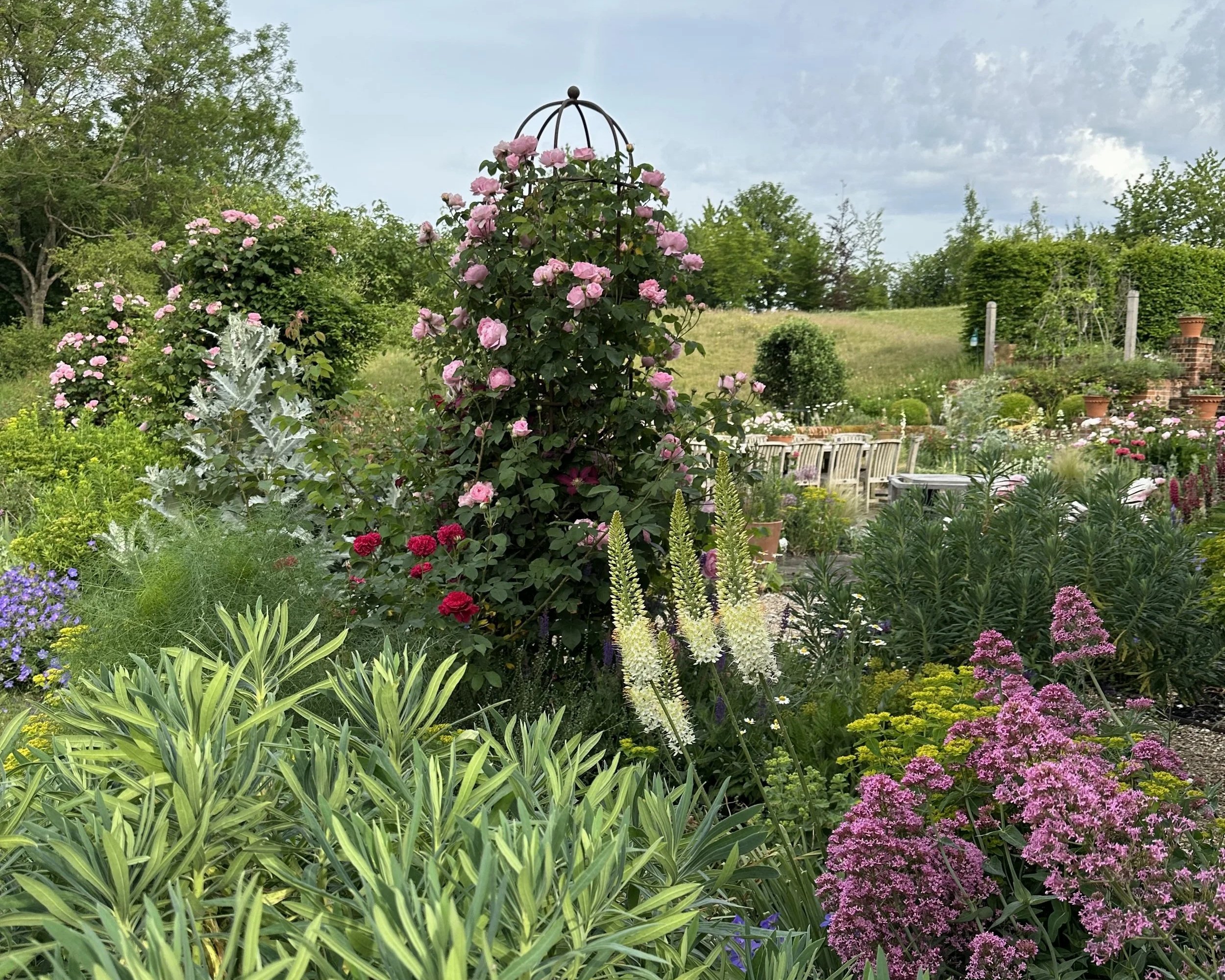
My three rose obelisks
Sycamore Gap
Finally, the three rose obelisks are coming with me.
I've always loved obelisks and the height and drama they bring to a border. Mine are no exception. Purchased long ago from Muntons with an unexpected bonus from my previous career, they frame our terrace beautifully as exquisite Rosa 'Constance Spry' spirals to their full height, followed by Clematis 'Polish Spirit', which flowers well into September.
Their frames support an extraordinary weight, don't flinch with a spot of "niffing" and stand reassuringly upright. Many obelisks have a habit of leaning like the Tower of Pisa; not these. Their sturdiness owes much to the 50 centimetres my husband and father-in-law sank into the ground all those years ago.
The new owners don't want them.
The obelisks have been felled.
My own Sycamore Gap moment.
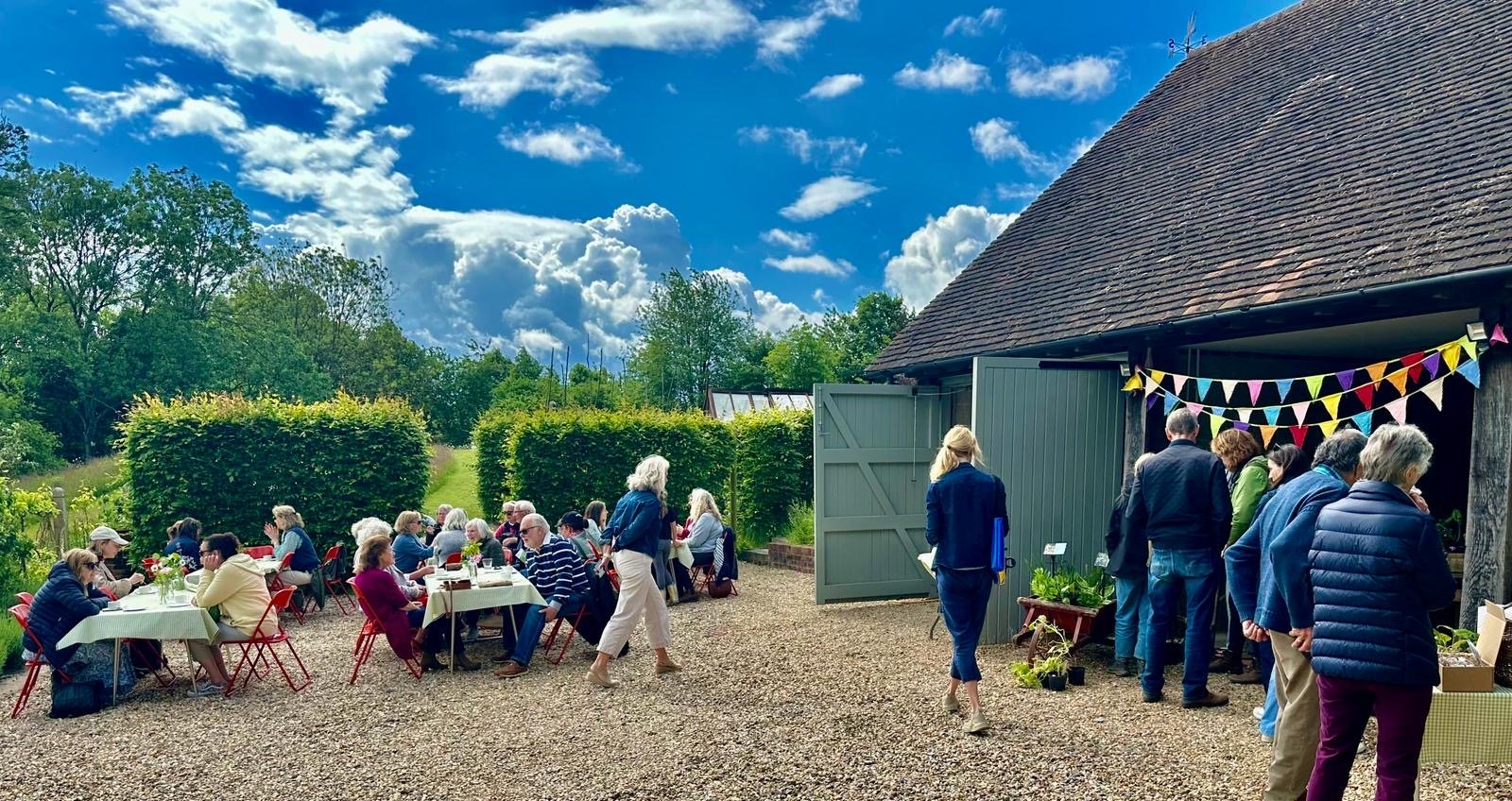
Happy memories garden opening for Horatio’s Garden
Looking forward
Yet none of these practical preparations softens the wrench of leaving a treasured, happy place. What makes it bearable is the excitement of a new garden, a new canvas and all the possibilities that lie ahead.
So, onwards! To a garden with glorious bones and "great capabilities for improvement".