

Hosepipe Bans
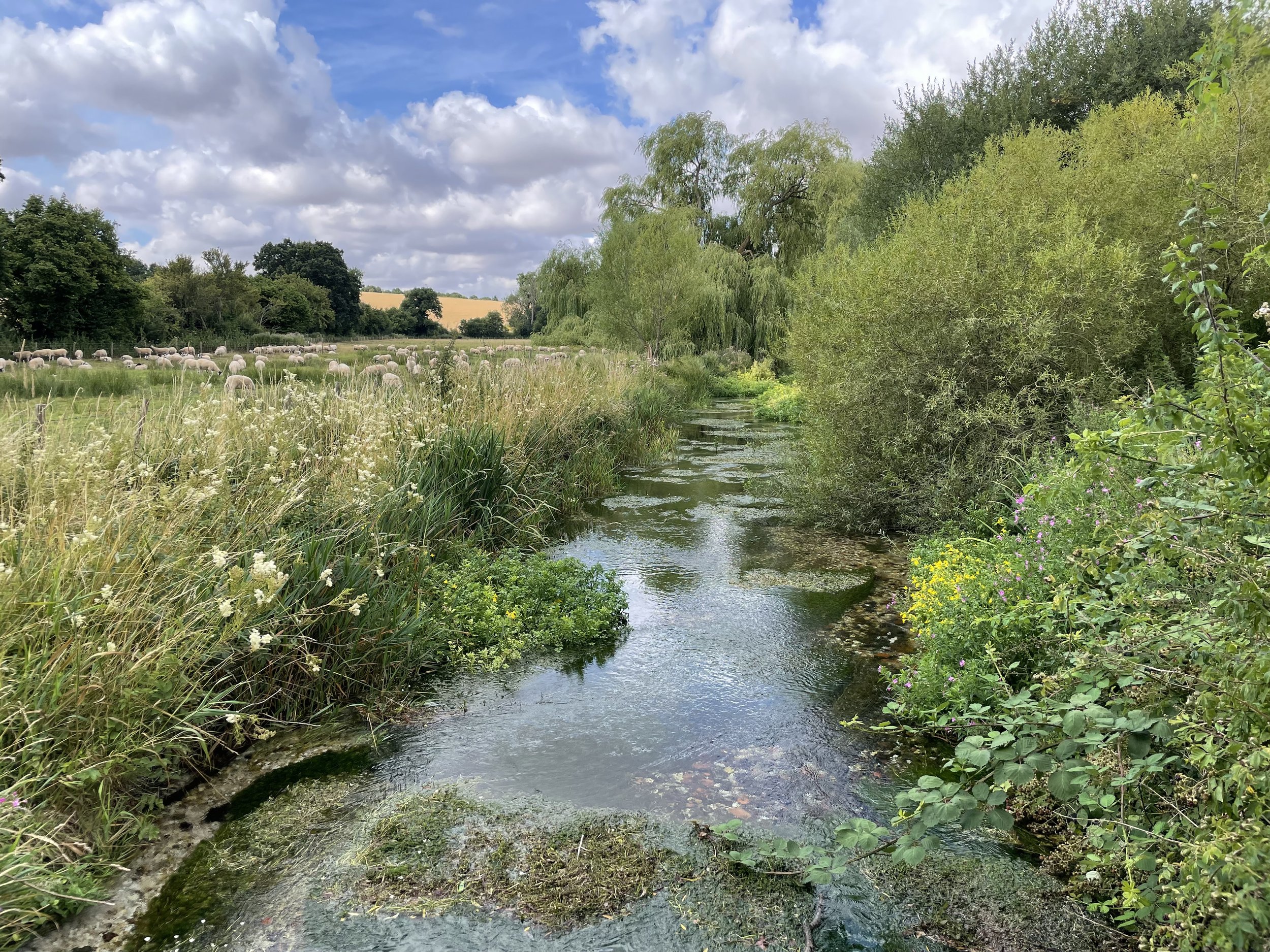
River Test near Overton, Hampshire
The current hosepipe ban across most of the UK feels like ‘Groundhog Day’. I’ve lost count how many hosepipe bans we’ve had in the past few years.
Here in Hampshire, the ban will protect the precious habitats of the chalk stream Rivers Test and Itchen local to where I live. We have wonderful views of the River Test from our own garden and I see first hand on my daily dog walks how the 25% reduction in water levels is damaging our trees, plants and wildlife. Further hosepipe bans are planned in Sussex and Kent to battle the pending drought caused by the driest July for 80 years. Climate change is real but there are steps we can all take to ensure we still have beautiful gardens and safeguard our environment.

Drought-resistant planting: Linaria ‘Canon Went’, Foeniculum vulgare ‘Purpureum’, Allium Schubertii, Verbena bonariensis, Stipa tenuissima, Cosmos Dazzler, Echinacea pallida, Rosa ‘Boule de Neige’
Drought-resistant Planting
As our summers become hotter and drier, changing what we plant in our gardens will be the easiest way for them to survive and still look gorgeous in scorching temperatures. We need look no further than the Mediterranean for shrubs’ inspiration and intermingle with drought- tolerant perennials.
The influential plantswoman Beth Chatto pioneered gardening where water was in short supply, creating an oasis at her home in Essex where rainfall is the lowest in the UK. Her gardens are spectacular and well worth a visit, an example of finding the right plants for the right place. Her famous Gravel garden is never irrigated but blooms fabulously all year round. Her books The Dry Garden and Gravel Garden are bookshelf classics, inspiring us to think and plant differently.
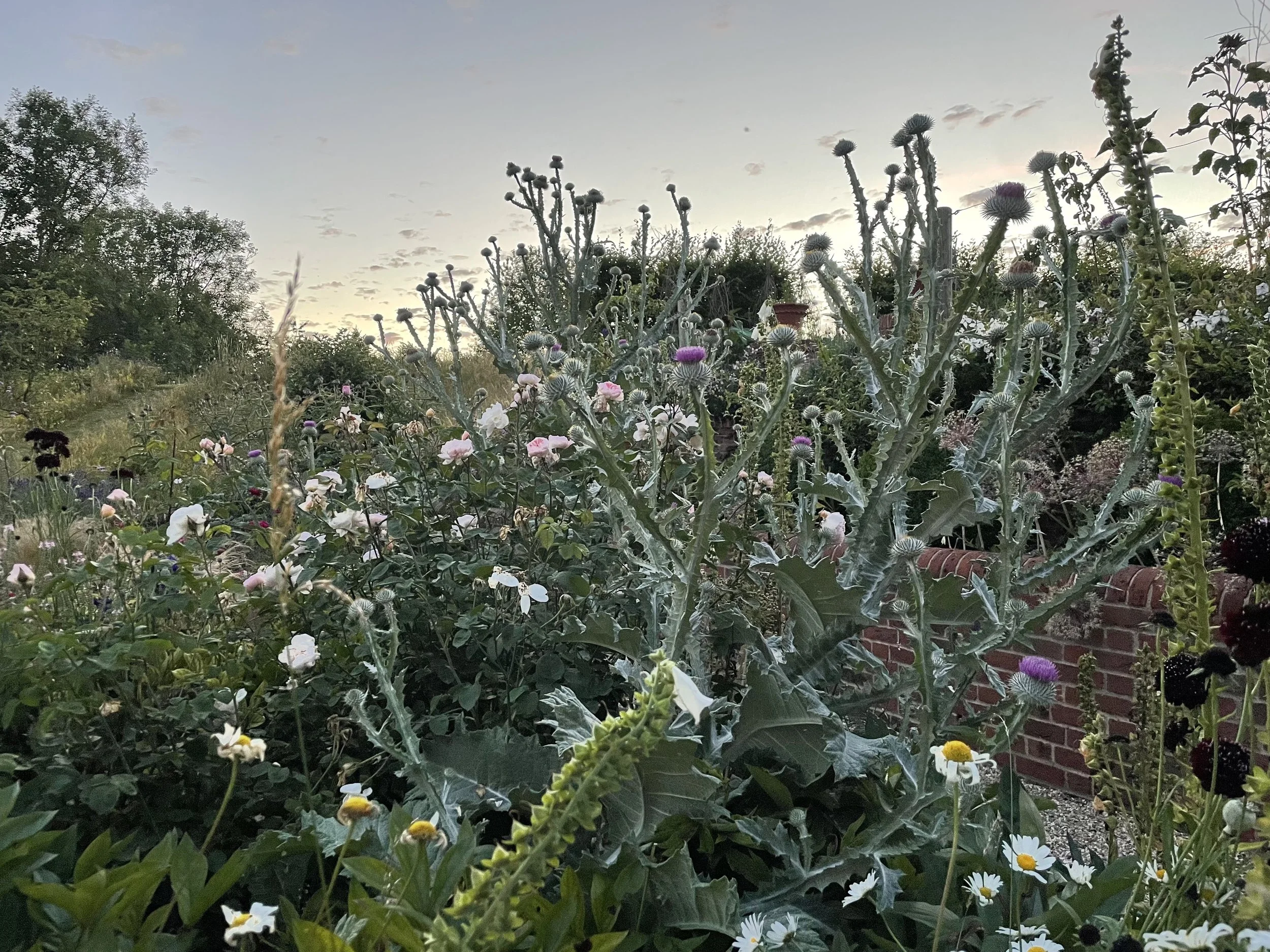
Silver foliage of Onopordum acanthium, the Scottish thistle
All that Glistens is not Gold
A good place to start is with silver plants. The general rule is that grey foliage plants, whose foliage will last throughout winter, need less moisture than those with green foliage as their leaves have wax, fur or fluff to which prevents transpiration. In high summer a scheme of grey and white is enchanting. Ballota, stachys, helichrysum, nepeta, eryngium, lavandula all provide a starting point, although I have to admit that I love the contrast of silver foliage with a bit of green accent and even some grasses for movement.

RHS Hampton Court 2021, Image Frank Wu, Tom Stuart Smith
To provide a masterclass, in 2021, the RHS had the prescience to ask maestro garden designer Tom Stuart Smith to design a garden at RHS Hampton Court Flower Show to showcase drought-tolerant planting. Perhaps it was the unbroken heat of the the first lockdown in 2020 which inspired their choice. The result was a planting lesson in the art of the possible, as perennials mixed with grasses, shrubs and trees for structure to create an enticing scene.
The learning is traditional English country gardens need to evolve to include different plantings which thrive on sparce summer rainfall. If we embrace the change, we can nurture and still enjoy beautiful gardens. The drought-resistant plant list is long and the opportunities are exciting. Do get in touch if you would like some help to embrace this different planting mindset.
Soil Matters
A healthy soil matters more than ever in times of drought as it is much less likely to get dried out. So looking after the soil takes care of our plants. Creating a vibrant culture of microbially rich soil by making and using our own compost to encourage the fungi, worms, mites, algae and bacteria to work their magic is a crucial ingredient of planting success. Then planting in the autumn or spring, the best time of year for plants to become established, and mulching thickly with organic matter to lock in moisture, will pay dividends. It really does start with your soil. As a garden designer I am always very particular in my specifications about topsoil, mulch and compost bins!

My own motley collection of watering cans
Water Harvesting
But what can we do now to make the most of the precious water that we have? With hose pipes banned, watering cans using a standing tap are the obvious way ahead. There are many water harvesting techniques from bath water to water butts attached to down pipes. I use spent washing up water to water the pots outside my kitchen door. And a quick glance at social medial will reveal all sorts of ingenious contraptions for syphoning water.
If you are lucky (and I count myself very fortunate) you may have a below ground gravity fed rain water harvesting tank. When we extended our house and had a digger on site, this was relatively easy to fit, taking the rainwater from our gutters, to provide enough water throughout the summer for our vegetables. This is certainly a sustainable longer term solution and we have specified the largest rain water harvesting tanks possible for our recent projects.
It’s all about Timing
Back to watering, your plants will need less water if you water in the cool of the day, either in the early morning or late evening, to avoid unwelcome evaporation. I have a slight preference for late evening as plants can absorb the water up through their roots and recover overnight before the next day’s blast of heat. Just avoid watering in the midday sun!
Irrigation
I hear you ask, wouldn’t it just be easier to put in an irrigation system? Even in a hosepipe ban, it’s still permitted to use an irrigation system. (What the water companies want to stop is ‘waste’ of water).
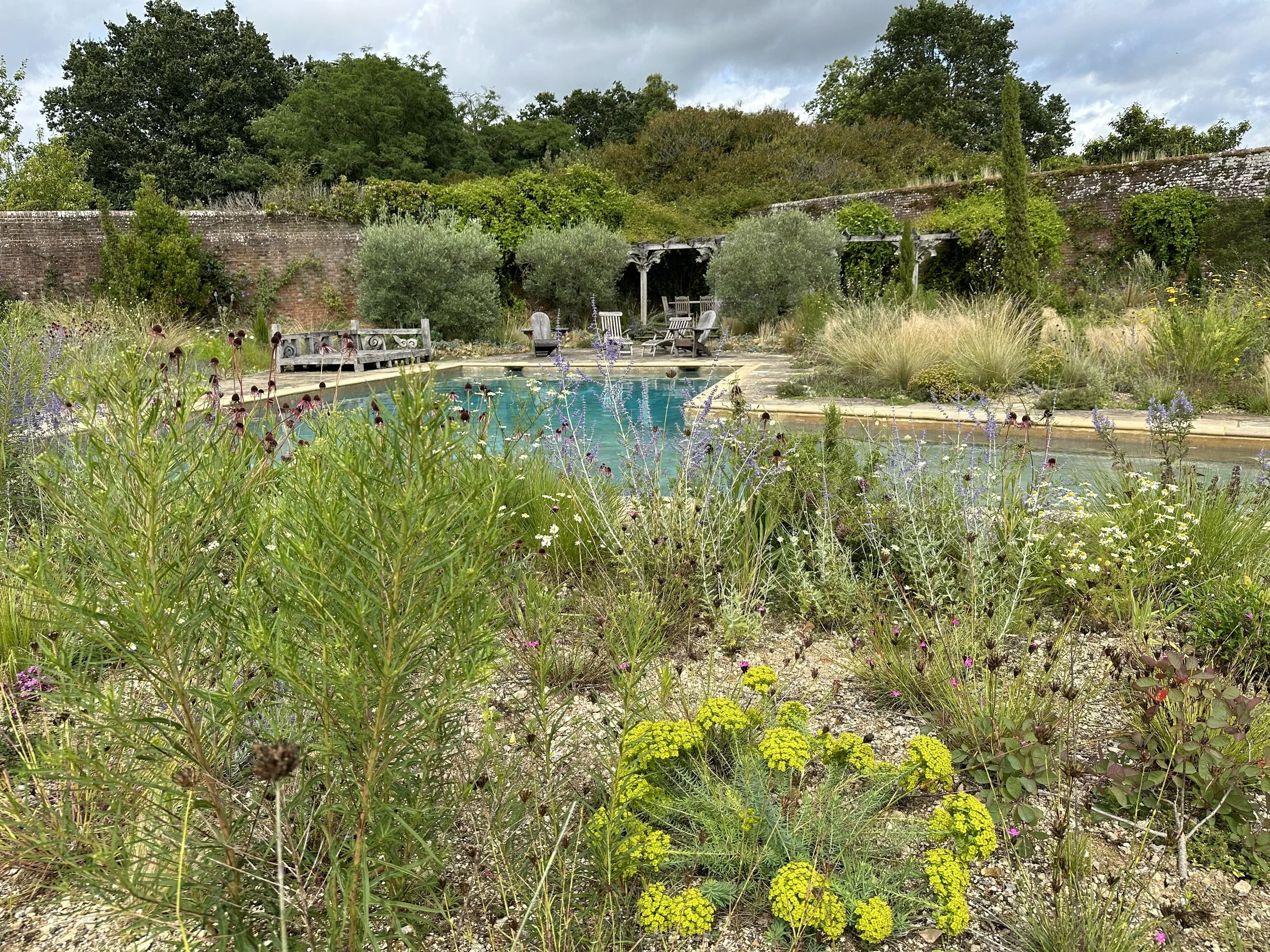
Knepp Rewilded Walled Garden
The answer to this question is maybe. Depending the timing of planting a garden, irrigation for establishment is a prudent approach. However, there are impressive examples of glorious gardens such a Knepp in Sussex where a wonderful walled garden has been reimagined and planted without any watering. In this case, the planting medium (crushed concrete mixed with gravel), the time of year (early Spring) and the plant sizes (9cm or smaller), as well as the plant selection have contributed to its arid and floriferous success.
Irrigation or not, we need to wean our gardens away from summer watering. It’s high maintenance and time consuming, things our clients rarely want!
Watering Priorities
So. if you haven’t got an irrigation system and are short on time, where should you prioritise?
If you have newly planted trees or hedges, I would focus my energies on these. In particular, trees are expensive to buy and plant and take three years to become established. Ensuring new trees are regularly watered for a full three years after planting or using a watering bag, is an insurance policy for the future bones and structure of your garden and your pocket. Shrubs, perennials and annuals are relatively inexpensive to replace should you be unlucky enough to lose them. I know my advice may seem counter intuitive as the inclination is to water flowers. Trust me, lavish love on your trees.
Finally please leave some water for wildlife. Have you noticed how bold and confused wildlife has become in this heat? They are suffering too: fox sightings in daytime, hares punch-drunk, muntjac close to the house. These are my own experiences. Leaving watering cans full, topping up birdbaths and saucers of water around the garden mean wildlife can help themselves to a much needed drink.
And when you have watered, remember to sit out and enjoy your garden and the sunshine, perhaps with your own drink.