

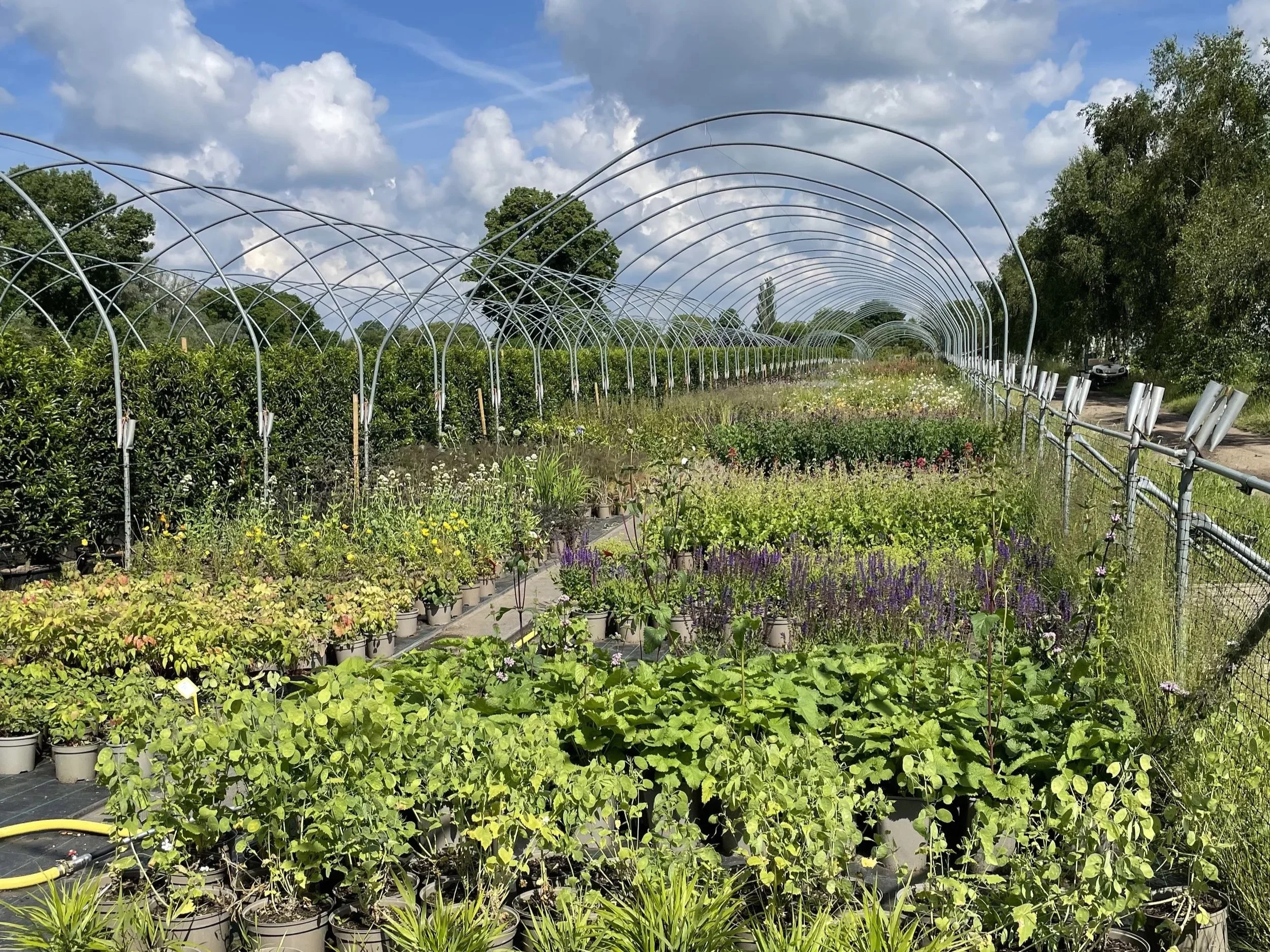
Plants ready for planting
We’ve currently been very preoccupied with our clients about when to do what.
The gardening year has a rhythm, and knowing when to do things can make all the difference. From preparing the ground and planting trees to sowing seeds, dividing perennials and establishing new borders. Working with the seasons, the stars and the weather can make all the difference to success and the effort involved.
The same is true when bringing a garden design to life. There’s a natural flow to the work involved, and planning the different phases of creating a garden with the seasons, can make the process simpler and often less expensive.
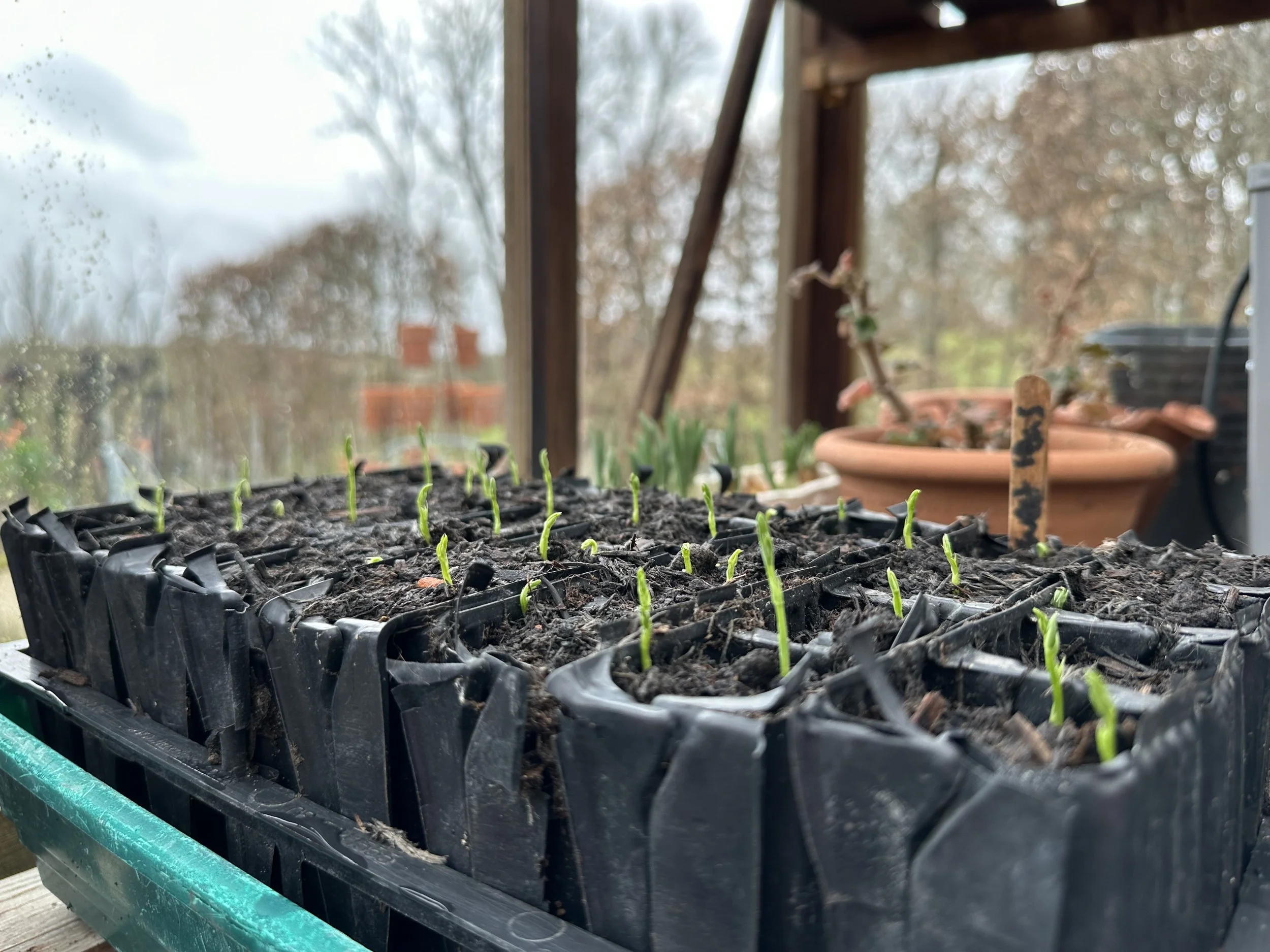
Sweet pea seedlings in early spring
Of course, garden and landscape design can happen at any time. My favourite time to design, decide on garden details and pull together planting plans is in winter, when I can dream of gardens from my drawing board and desk.
Winter: A Time for Design and Structure
Winter is also the time for planting trees and hedges. The bare-root season is when deciduous trees and plants go dormant, shedding their leaves and stopping obvious top growth. Because the tree or plant is resting, it can be lifted from open ground and replanted with minimal shock, ensuring the best chance of success.
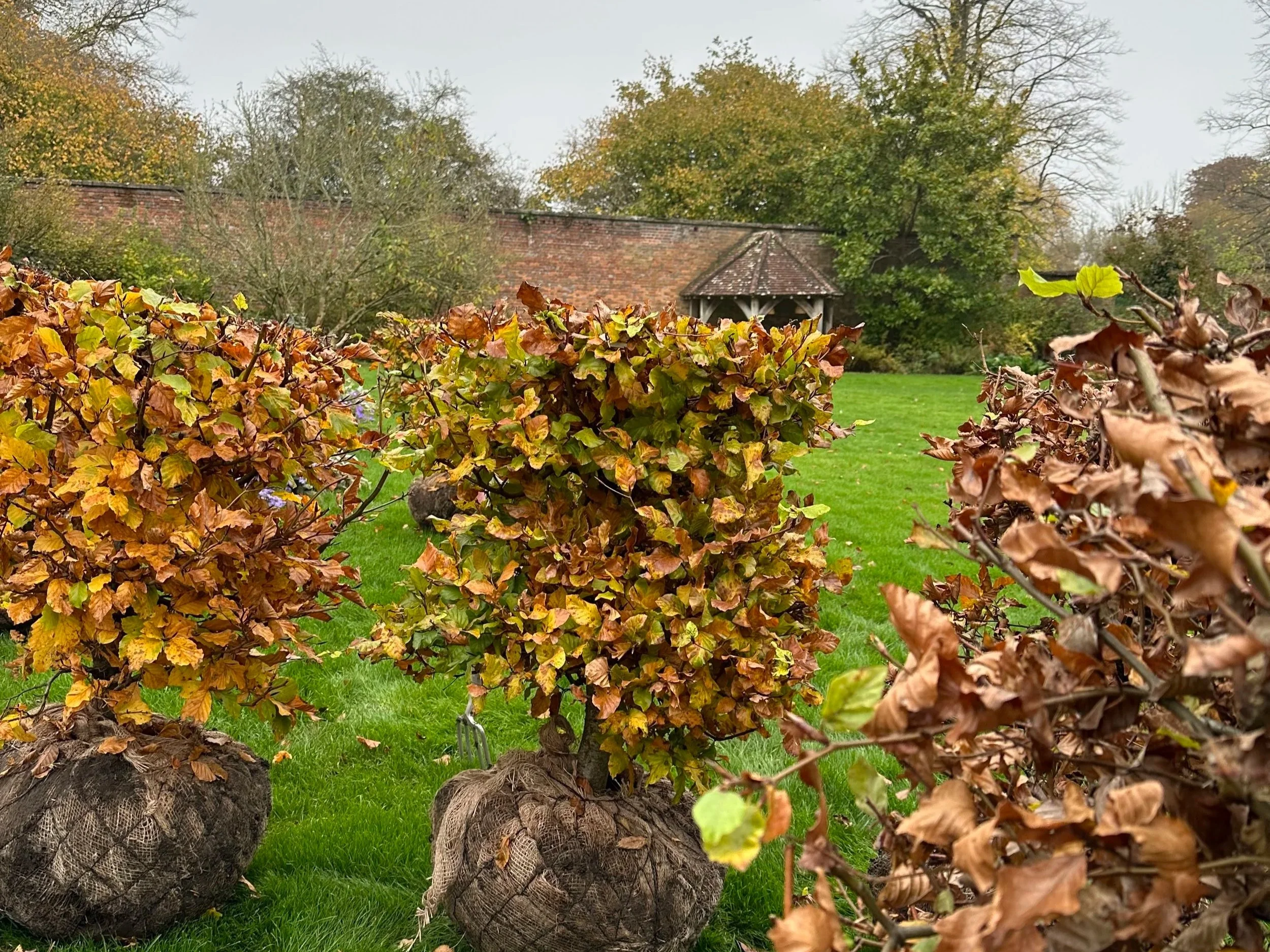
Bare root Fagus sylvatica hedging plants in November
It starts with selection: choosing the exact specimens that are destined for our gardens. Handpicking in person or exchanging photos with growers and nurseries, checking back and front views, exact sizes and the ‘jaunt’ of the branches; these all ensure that the very best and most interesting specimens are selected for our projects.
Few things are more exciting in the creation of a garden than the arrival of an arctic lorry loaded with carefully selected structural trees and hedges to provide the instant framework that carries a garden in its early years. A cold day spent “clocking” trees, so they are planted at their best angle for views from the house or other vantage points, is a happy and worthwhile winter endeavour.
While tree and hedge planting is best done in winter, hard landscaping is best done outside the coldest months. Frost is the enemy for landscapers. Water in fresh mortar expands as it freezes, breaking the bond before the mortar has “cured” and leaving joints crumbly, weak and prone to cracking. A cold and frosty night can ruin work done during the previous day. I know many landscapers who take January off and travel to the southern hemisphere!
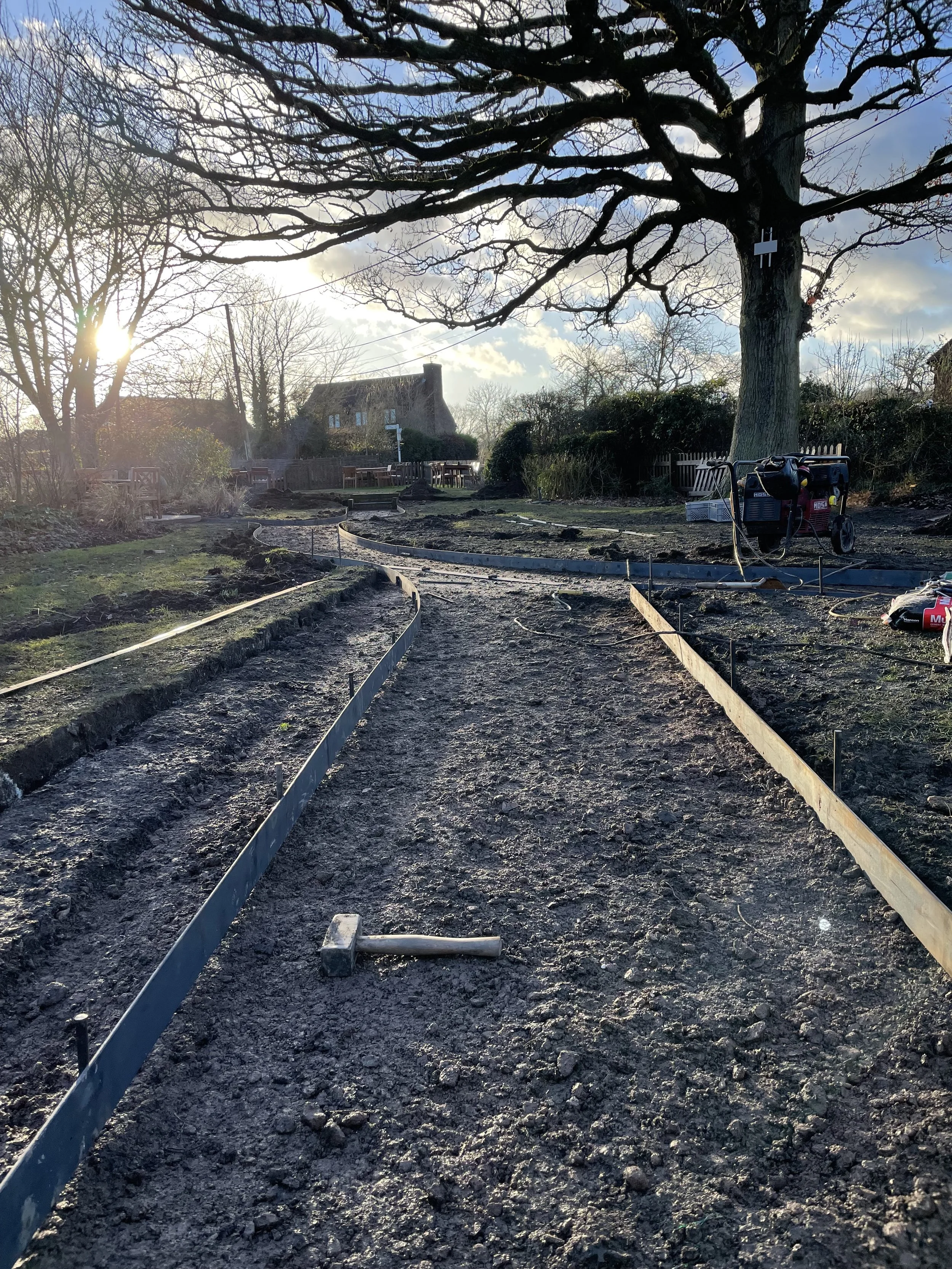
Creating our curved walkway at The Crown and Garter, Inkpen on a cold day in February
The shifting of earth, the building of walls, the laying of terraces, the preparation of beds and the creation of all those details which lift a garden from the ordinary to the magical take time. Landscapers like a garden space to themselves and prefer not to share a site with builders. In their words, they like to “get a clear run at it”. So the best season for landscaping is once the builders have left. However, this luxury may not work with practical plans.
Springtime: Planting for Success
As spring arrives, it’s the perfect time for sowing seeds and planting shrubs, perennials and grasses. We like to plant in March, with plants that have overwintered well. If we can plant on or after the spring equinox, when it’s not too wet and not too dry and the days are lighter, the plants should establish quickly. With any luck, the weather will do the watering and the plants will quickly put down their roots.
If spring isn’t possible, planting from mid-September to late October also works well. The soil is warm, there’s still plenty of sunlight and it’s an altogether gentler time of year. I find there are few planting casualties from autumn planting, particularly when the first frost is late, as it has been this year. The reason: plants have time to put on a bit of growth and get used to their new home.
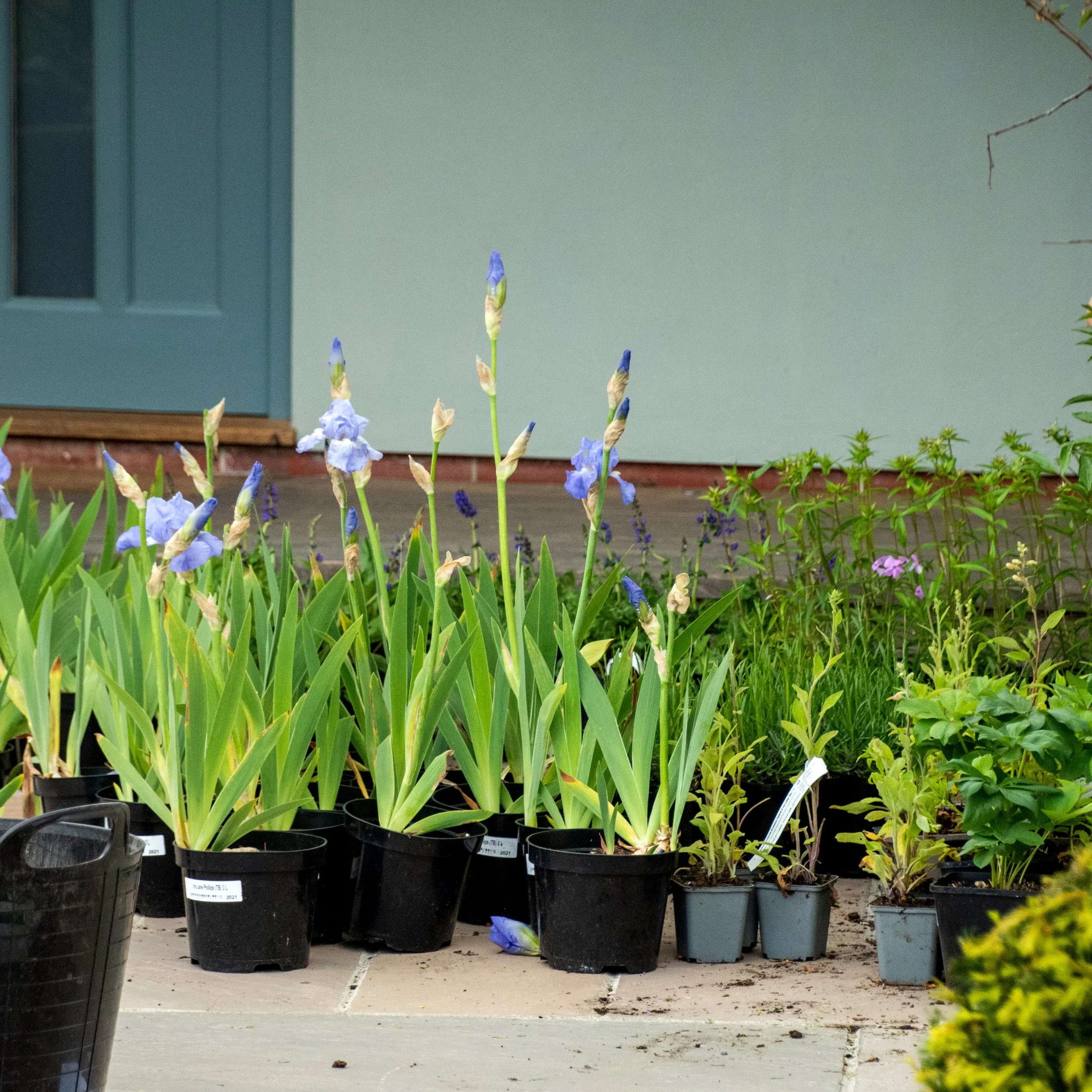
Spring planting
Autumn: Bulbs and Finishing Touches
And autumn is also the time for bulbs. Lots and lots of bulbs! Narcissus like being planted in September, but tulip bulbs like the cold, ideally between the first frost and Christmas. Although I have been known to plant tulips in January without detriment.
When the garden is made and planted, the finishing touches are a final layer of mulch to tuck up the plants, add goodness to the soil and suppress weeds.
Seed sowing lawns and meadows is easily done in March or September. In fact, sowing at a different time, can be an unpredictable headache as watering large areas can be unrealistic.
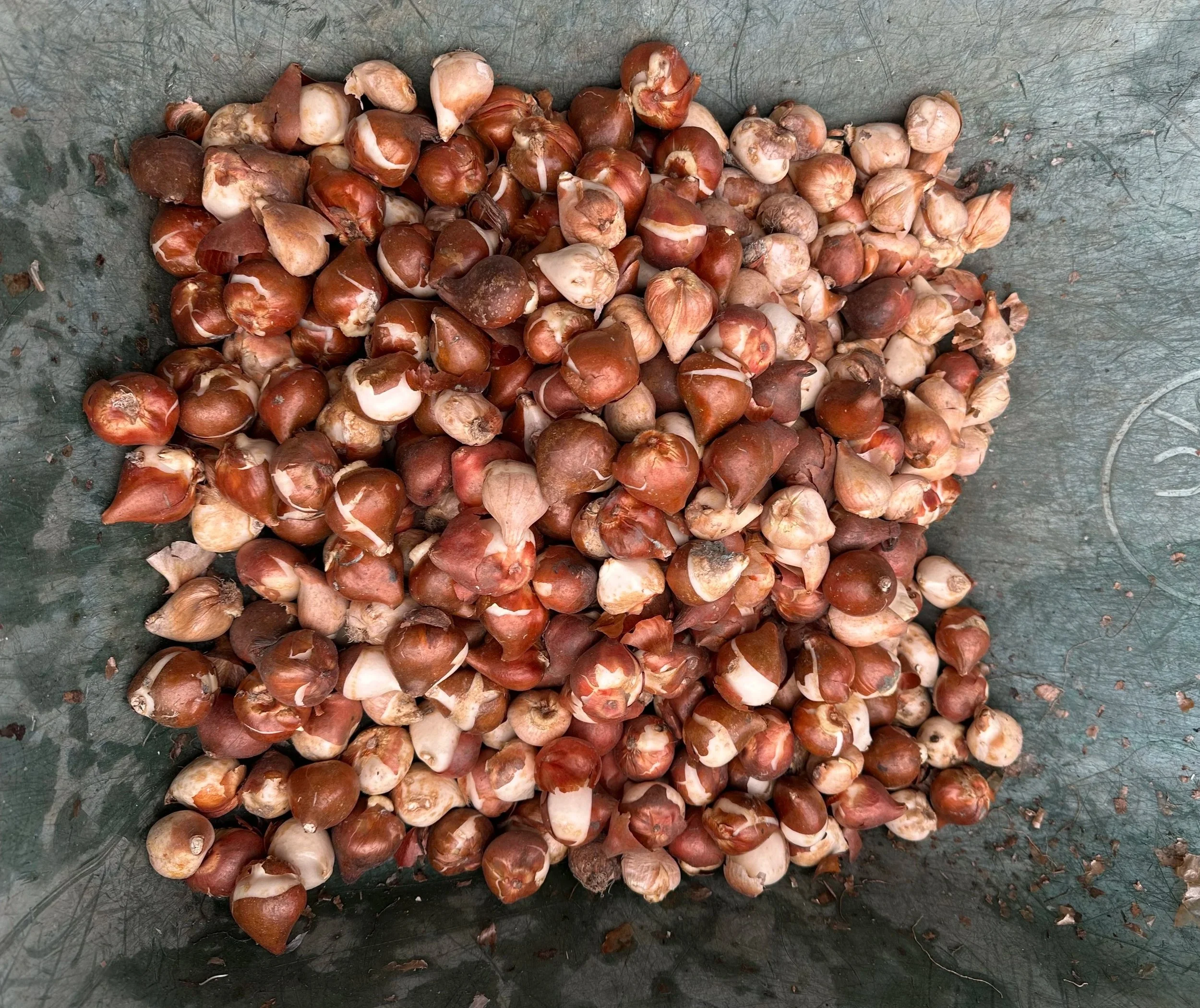
Tulip bulbs ready for placing and planting in November
Summer: Enjoyment and Pleasure
Summertime is for enjoying the hard work of other seasons. Ideally we avoid planting in summertime as conditions can be harsh. Put simply, summer planting increases the watering burden and the risk of losses. But landscapers are delighted to be laying terraces and prepping beds; fine weather makes their task easier and their tans deeper.
Everything in Its Season
So, you see, everything has its season. Of course, it’s possible to break these “rules”, like any other rule, however the results will be harder work and success is riskier. When creating a garden, following the seasons, is following the easiest and cheapest path.
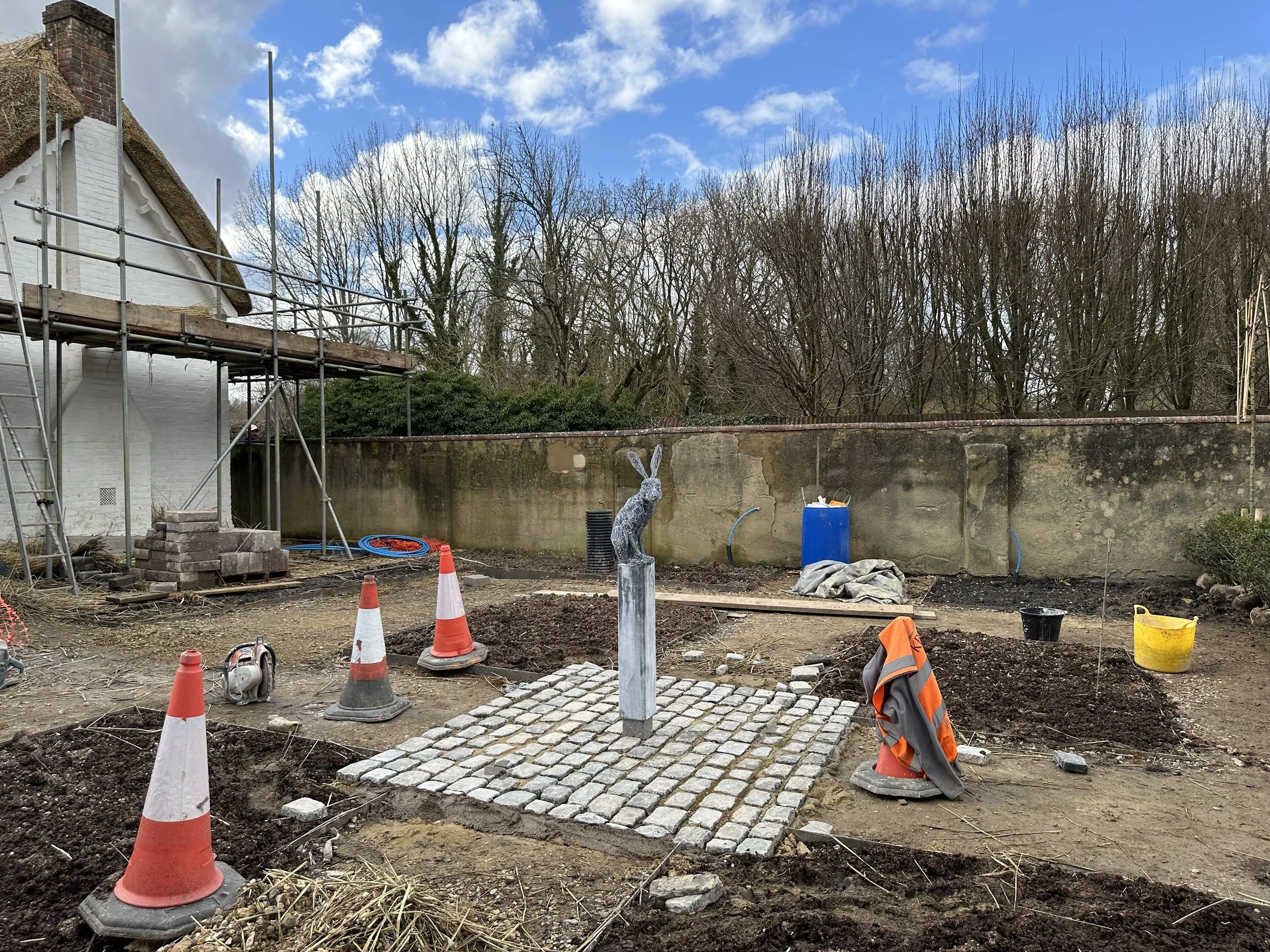
Hard landscaping in early spring